
There Is No Precise Formula for a Career in Environmental Law
Students interested in environmental and energy law often want to know what they should do first. Which internship should they take? Should they start in government, a nonprofit, or private practice? Does their first job need to be environmental? What happens if they take a job and discover it is not the right fit?
There is no single answer or standard formula.
The careers of four recent AUWCL alumni show how different the path into environmental work can look. Some knew early that they wanted to practice environmental law. Others did not. Some started in environmental positions. Others built litigation or transactional skills elsewhere before finding their way into the field. One found that an environmental law firm was not the right setting for him. Another is doing primarily transactional work but supporting the mission of an environmental agency.
Their experiences offer a useful reminder to students that a career does not have to develop in a straight line.
Jackson Garrity, Class of 2021
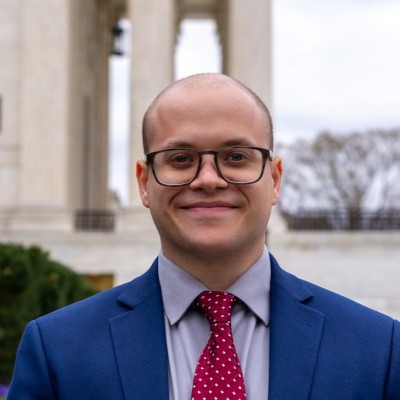
Jackson Garrity knew he was interested in environmental law while at WCL. His law school experience included environmental and natural resources courses, the Environmental Law Practicum, the Sustainable Development Law & Policy Brief, and the National Energy Law Moot Court Competition.
His path after graduation, however, was less straightforward.
“I’ve bounced around more than expected after finishing law school, likely based on a combination of not understanding the legal market well, being unsettled about what specialization I wanted, and unexpected changes in my personal life,” Garrity said.
Garrity first clerked for Judge Andrea Hertzfeld on the D.C. Superior Court. He then joined Beveridge & Diamond, a prominent environmental law firm in Washington, D.C. The firm job offered what he thought he wanted at the time: environmental litigation experience, strong training, and compensation that, as he puts it, seemed “life-changing” as a new lawyer.
“He liked and respected the lawyers he worked with, but in the process discovered that he craved an opportunity for direct public service,” Garrity said.
That realization forced him to reconsider what he wanted from his career. He found that opportunity with the City of Chicago Department of Law, joining the city government as a new administration was working to implement and defend its progressive agenda. There, he handled constitutional and commercial litigation and worked on matters involving public services, land use, environmental permitting, infrastructure, and other city priorities. The work gave him significant litigation experience, but he eventually concluded that government was not quite the right fit either.
When an opportunity opened at the Natural Resources Defense Council, he took it. Today, Garrity litigates environmental, constitutional, and regulatory cases for NRDC. He sees the other jobs that came before this one not as wasted time, but as part of what prepared him for his current work.
“I’ve combined my desire to work on environmental issues with my desire for public service and have used the skills developed across my other positions to build success,” he said. “The long journey was all worth it!”
His experience demonstrates to students that it is possible to make a thoughtful and reasonable career choice, learn that the work or setting is not right for you, and still carry valuable skills from that job into the next one.
Kim Hayes, Class of 2024

Kim Hayes did not enter WCL planning to become an environmental lawyer. She arrived with an interest in publishing. That changed quickly.
After her first year began, Hayes found herself increasingly drawn to civil rights and environmental law. Rather than trying to decide immediately what kind of lawyer she would become, she used law school to test different kinds of public service and environmental work.
Her internships took her to the D.C. Department of Energy and Environment, the Natural Resources Defense Council, the White House Council on Environmental Quality, and the U.S. Department of Justice Environment and Natural Resources Division.
Hayes also spent her final semester at WCL as a student attorney in the Immigrant Justice Clinic. There, she developed case strategy and supporting evidence for clients seeking immigration relief, including naturalization, asylum, voluntary departure, and temporary protected status. The clinic gave her experience with direct client representation in an area outside environmental law.
Together, those positions exposed her to environmental regulation, litigation, federal policymaking, state and local government, nonprofit advocacy, and direct client service.
After graduating in 2024, Hayes joined the Southern Environmental Law Center in Charlottesville, Virginia. Her work now focuses on the Clean Air Act and Virginia air pollution laws, including efforts to reduce pollution from industrial facilities in communities that have historically carried a disproportionate environmental burden. She works with community members and partner organizations and is involved in litigation, air permitting, public comments, and petitions.
On paper, Hayes’s path may look direct, she does not see it that way. “Even after practicing for two years, I don’t have everything figured out,” she said. “I am still discovering where I fit best.”
For Hayes, landing an environmental law job right out of law school did not mean she had found one permanent path for her career. Her interests developed through experience, and she expects them to continue developing.
“As you grow and the world evolves,” she said, “your path naturally adapts.”
Elena Gartner, Class of 2021

Elena Gartner knew during law school that she wanted to practice environmental law, but her first job after graduation was something very different.
After graduating in 2021, Gartner joined Goddard Riverside Law Project as a staff attorney and tenant advocate in Manhattan. She represented tenants in housing court as New York emerged from the height of the COVID-19 pandemic. The work moved quickly. Gartner describes it as a crash course in civil litigation.
She appeared in court, worked directly with clients, and handled cases involving serious housing conditions. In one case, mushrooms were growing out of a client's kitchen floor. In another, part of a client's apartment floor had collapsed because structural beams had deteriorated after years of neglect. The work was meaningful, and it gave Gartner substantial litigation experience early in her career, but she continued looking for a way into the environmental field.
When a contract attorney position opened at NRDC, she saw it as a chance to make that pivot into the environmental sector. The position became a bridge into full-time environmental practice and led to a role with EPA Region 2’s Office of Regional Counsel in New York City. From there, she moved to her current position with the Environmental Protection Bureau of the New York Attorney General’s Office.
Gartner now works specifically on PFAS litigation. Her docket includes major cases against chemical companies, multidistrict litigation, and related federal bankruptcy proceedings.
Her first job after law school had little to do with environmental statutes. It nevertheless gave her courtroom and litigation skills that became useful when she later moved into environmental practice. Her contract position at NRDC also gave her an entry point into the field and helped lead to the government positions that followed.
“I never would have anticipated that my career would take such a winding path,” Gartner said, “but each experience has definitely built on the last, and I have been fortunate to work with wonderful people in each of these jobs.”
Theresa Geib, Class of 2021

For Theresa Geib, the unexpected part of the path was not discovering an interest in environmental work. She had that interest before law school. Geib studied ecological management and restoration at UC Davis and pursued environmental opportunities throughout her time at WCL. She worked on conservation easement research with Professor William Snape, interned with the National Association of Clean Water Agencies, and conducted research involving the Marine Mammal Protection Act.
Then COVID disrupted the professional network she had spent law school building. Geib returned to California after graduation and found that most of her network was still on the East Coast. She felt, in her words, like she was back at “square one.” The connection that helped change that came from an unlikely place.
Her father offered to introduce her to the former sister-in-law of an old friend from middle school. She was not an attorney, but she knew people in California's environmental community. That introduction led to another introduction, and then another. People passed Geib's resume through their networks and agreed to speak with her. Eventually, a Bay Area attorney brought her onto environmental projects and helped her develop both her legal skills and her local network.
That networking eventually led to project-based environmental work with Beyond Compliance LLC, where Geib worked on air quality and Clean Air Act compliance matters. Her projects included developing an Air Quality Registry for the U.S. Department of Energy and air quality compliance procedures for a Bay Area client.
The experience helped deepen both her environmental work and her connections in the Bay Area, eventually leading to her current role as a staff attorney with the Bay Area Air Quality Management District. Her current practice is another example of how broad an environmental legal career can be. Geib primarily reviews and drafts contracts, grants, procurement documents, board resolutions, and other transactional matters for the Air District. She also advises the District's Business Office in contract negotiations and handles legal research as issues arise.
She is not practicing environmental law in the traditional sense of litigating environmental cases or interpreting environmental statutes every day. But she is using her legal skills for an agency whose work is focused on air pollution, accountability, and investments in communities that have historically carried disproportionate environmental burdens.
“I started law school with the hopes of ultimately working in government for the betterment of the environment,” Geib said. “While I am not practicing environmental law, I have accomplished that goal.”
For Geib, networking did not mean attending formal receptions and awkward conversations. It started with one unlikely introduction, followed by another, and eventually led to the work she had been trying to find.
What Students Can Take from These Stories
These four career paths look very different, and none of them followed the same formula.
Garrity moved from a judicial clerkship to private environmental practice, city government, and eventually NRDC. Hayes used law school to explore several forms of environmental and public-interest work before joining SELC. Gartner built litigation skills in housing court before moving through NRDC and EPA into major environmental litigation for the State of New York. Geib rebuilt her network across the country and found a role that allows her to support environmental protection through transactional legal work.
Those different paths are useful examples for students entering a legal market in which the first opportunity may not look exactly like the job they imagined while in law school. A clerkship can build litigation skills. A government job can teach how agencies operate. Private practice can provide training and substantive experience. A contract position can provide an entry point. Work outside environmental law can build skills that later transfer directly into environmental practice. And lawyers can contribute to environmental protection even when the legal work they perform is not itself traditionally labeled “environmental law.”
Your first job matters, but it does not have to be an environmental law job to move you toward an environmental law career. A job outside the field can still help you build the skills, experience, and relationships that lead to the work you ultimately want to do.
Students often come to law school with a plan, and plans can give us a sense of direction and control. But the truth is that we do not control many of the things that shape a career. The legal market changes. Jobs open and close. Personal circumstances shift. Priorities change. Opportunities come from places we did not expect. When things do not unfold according to plan, it can feel like failure, especially when we have tied success to one particular outcome. But a change in direction is not the same thing as failure.
The intention behind the plan matters more than the plan itself. What do you want to work toward? What kind of lawyer do you want to become? What kind of work do you want to contribute to? Those answers may also change over time. The important thing is to keep moving with intention without becoming so fixed on one route that you miss another way forward.
Your first job does not determine the rest of your career, and your first plan does not have to be your last.