
Student Spotlight: Daniela Corona
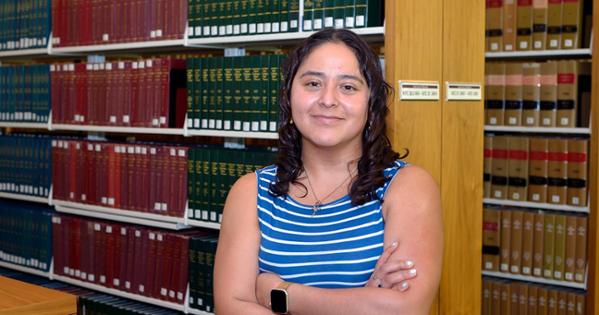
When Daniela Corona was growing up in Half Moon Bay, California, becoming a lawyer felt like an impossible dream. Raised in a low-income, immigrant household, she watched her father spend his life working in the fields. As a child, she and her siblings became translators for their parents, learning early what it means to navigate a system not built for people like them.
“A lawyer symbolized everything my family, my community and I lacked: power, influence, financial security and the ability to change unjust laws and policies,” Corona said. “I had a front row seat to injustices in our society related to poverty, immigration, police violence and discrimination.”
Next month, she will graduate from American University Washington College of Law, and she is already putting that power to work.
Corona’s path to law school began with a full scholarship to Claremont McKenna College, a transition she describes as a dramatic pivot. The private liberal arts institution opened doors she had never had access to, funding her LSAT prep, her law school application fees and visits to prospective schools. A semester in Washington, D.C. sealed her decision about where she wanted to land.
“I fell in love with D.C. and felt like I belonged in the city as someone who has always been drawn to government and politics,” she said.
During law school, she interned at federal agencies, policy organizations, private firms and nonprofits, all without leaving the city.
After graduation, Corona will join the Central West Justice Center, a nonprofit where she will practice employment and immigration law through the Migrant and Seasonal Farmworker Project. The fit is personal.
“My dad spent most of his life working in the fields,” she said. “I know what it is like to feel helpless.”
She identified uncertainty as the most pressing challenge facing migrant workers today. Her goal is to help them understand their rights and gain confidence in exercising them.
“Our immigration policies change day by day, hour by hour,” she said. “There are risks associated now with ‘looking’ like an immigrant regardless of legal status.”
Corona credits AUWCL’s experiential learning opportunities – particularly its clinical programs – with preparing her for the realities of public interest work. Through Clinic, she worked directly with low-income clients, taking ownership of cases and navigating the full weight of that responsibility firsthand.
She also found an unexpected community among faculty.
“Professors have created a space for us to feel our frustrations, shock, sadness and fear in community and learn how to cope with our emotions and channel them into serving our clients,” she said. “Public interest work can be so emotionally taxing, and that support made a real difference.”
Corona offers this advice for students from similar backgrounds considering law school.
“Rarely will you find someone from a low-income background with the experiences that you have,” she said. “But that is why it is so important to join the legal field and to speak up – they need to hear your voice and your perspective. Keep your head up and don’t lose sight of your reasons for attending law school in the first place.”
AUWCL is proud of students like Daniela who are driven to become advocates for what they believe in