
Professor Marcos Orellana Publishes Landmark UN Reports on Human Rights and Toxics
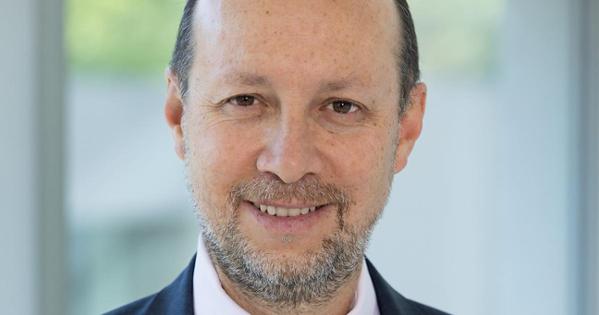
American University Washington College of Law celebrates Professor Marcos Orellana, whose groundbreaking work as United Nations Special Rapporteur on toxics and human rights has been published in two major reports to the United Nations in 2025. These reports address some of the most urgent challenges at the intersection of environmental protection, human rights, and global accountability.
In his report to the UN General Assembly, Military Activities and Toxics, Professor Orellana examines how warfare and military practices create long-lasting toxic legacies that endanger human health, ecosystems, and peacebuilding efforts. From depleted uranium and cluster munitions to oil spills and hazardous debris, military contamination often leaves behind invisible yet devastating consequences for civilians, Indigenous Peoples, and displaced communities. The report documents cases from Iraq, Ukraine, Colombia, Gaza, Lebanon, and beyond, showing how toxins released during conflict persist in soil, water, and air for decades, undermining reconstruction and violating rights to life, health, food, and a clean environment.
At the UN Human Rights Council, Professor Orellana presented Guidelines on Access to Justice and Effective Remedies in the Context of Toxics. This report addresses a central barrier facing victims of toxic exposure: impunity. Around the world, those harmed by hazardous substances from pesticides and industrial waste to military pollution struggle to access remedies due to restrictive laws, unreasonable burdens of proof, prohibitive litigation costs, and lack of information.
The report lays out 24 practical guidelines — referred to as the Orellana Guidelines — for ensuring victims’ rights to justice and effective remedy. These include measures to shift the burden of proof, extend statutes of limitation to match the latency of toxic illnesses, ensure transparency of environmental data, and guarantee comprehensive reparations ranging from medical care and site cleanup to guarantees of non-repetition.
Together, these reports underscore Professor Orellana’s leadership in framing toxic pollution not only as an environmental issue but also as a profound human rights crisis. By documenting the toxic legacies of war and by advancing pathways to justice for victims, his work provides governments, courts, and communities with tools to confront some of the most pressing injustices of our time.
Through these contributions, AUWCL faculty continue to shape global debates and advance the rule of law at the highest levels. Professor Orellana’s reports reaffirm the College of Law’s commitment to tackling urgent transnational challenges where human rights, environmental protection, and justice converge.