
From Global Development to Local Service
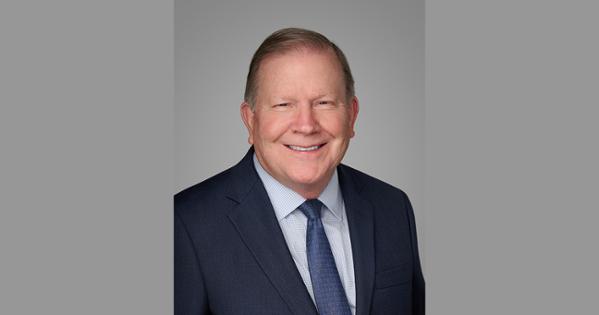
For more than three decades, Dana Martin ’84 worked at the intersection of law, international development, and regional cooperation across Latin America and the Caribbean. His work often involved complex negotiations between governments, institutions and communities — efforts aimed at addressing poverty, strengthening infrastructure and building systems that could benefit millions.
Today, Martin’s work looks very different. Instead of negotiating international financing packages or helping structure regional energy markets, he spends much of his time helping distribute food to families in need in South Arlington, Virginia.
It is, in his words, a shift from “macro impact” to “micro impact.”
Martin’s path toward international development began early. At age 16, he spent a summer in the southern Amazon rainforest of Colombia working on a mass inoculation program through Amigos de las Américas. His experience volunteering with the nonprofit organization changed the trajectory of his life.
“It totally changed my view of the world,” he said.
He went on to study Latin American Studies and Spanish at the University of Colorado, including a year in Lima, Peru. After additional graduate studies, Martin spent three years living in the highlands of Guatemala working with a Mam-language community in a nonformal adult education program.
The experience exposed him to the stark realities of poverty and political violence. During those years, Guatemala’s civil war intensified, and rural Indigenous communities faced escalating repression.
“Many of the people we knew were affected,” Martin recalled. “Friends were killed, including the obstetrician who delivered our first son and our personal lawyer who had been offering free legal clinics to farmers.”
Witnessing these events led Martin to a difficult realization: meaningful change required work at many levels — from grassroots community engagement to legal and policy reform.
“That’s when I decided to go to law school,” he said. “I wanted to acquire new tools to address at least some of the issues I had seen.”
Martin arrived at American University Washington College of Law in 1981 with a dean’s scholarship from then-Dean Thomas Buergenthal. At the same time, he began working at the Washington Office on Latin America (WOLA), monitoring the human rights situation in Guatemala and briefing members of Congress and policymakers.
Balancing law school, a job, and a young family was demanding — his second son was born during his time at AUWCL — but Martin found encouragement from faculty, including Buergenthal, and Professors Robert Goldman and Claudio Grossman.
After graduating, Martin accepted a short-term contract with the Inter-American Development Bank (IDB). It unexpectedly turned into a 30-year career.
As a lead attorney at the IDB, Martin helped structure sovereign financing operations across Latin America and the Caribbean. One of the projects he remembers most proudly was serving for a decade as legal counsel to the team developing the Central American Electrical Interconnection System, known as SIEPAC.
The project interconnected the electric grids of six countries — Panama and five Central American nations — creating a regional electricity market that allowed countries to share power more efficiently and reduce costs.
The legal challenges were significant. Member countries could not provide cross-guarantees for project financing, requiring creative legal solutions and years of negotiations.
After a decade of work, Martin helped lead the final negotiations for the financing package in Costa Rica, bringing together government delegations, national electric companies, and international development partners.
While proud of large-scale projects like SIEPAC, Martin says the greatest lessons of his international career were often intangible.
“When committed people from different cultural and professional backgrounds come together with mutual respect, positive outcomes can happen,” he said. “The key is to listen and learn from each other.”
After retiring from the IDB, Martin and his wife, Leyda Fajardo, decided to dedicate more time to community service. Fluent in Spanish and long committed to volunteer work, they began helping with food distribution during the early months of the COVID-19 pandemic.
What began with packaging beans and rice in their garage soon evolved into a larger effort. Today, Martin serves as vice president of the board of a volunteer-run food distribution program organized through a Spanish-language Episcopal church and supported by a network of community volunteers.
Every other week, the program provides food to roughly 400 families in West Falls Church and South Arlington.
“We cannot begin to meet the need,” Martin said, noting that recent cuts to federal food assistance programs have made the challenge even greater. “But we’re trying to do what we can to help fill the gap.”
In addition to food distribution, Martin and his wife volunteer with an emergency financial assistance program that supports families facing sudden economic hardship.
Through this work, Martin says the most important lesson has been the power of listening.
“You cannot understand people’s lives just by watching the news,” he said. “You have to listen with empathy and care to individuals telling their own stories.”
For Martin, the shift from global development work to neighborhood service has reinforced an important truth.
Large-scale initiatives remain essential, he said, but meaningful change can also begin in small, local ways.
“Micro-impact work is accessible to anyone,” he said. “It brings people together, builds friendships and community, and helps us rethink what is important.”
Reflecting on his career, Martin credits his education at AUWCL with helping him see how global and local efforts can work together.
“Washington College of Law showed me how I could eventually do both,” he said.
Now in retirement, Martin encourages students and fellow alumni to think about how their professional skills can continue to serve others throughout their lives.
“Practicing law is itself a form of service,” he said. “But even beyond that, the skills lawyers develop — analysis, ethics and commitment to clients — are valuable to many organizations and communities that need help.”
And sometimes, he added, the most meaningful work happens close to home.