
Advancing Climate Solutions Across Sectors
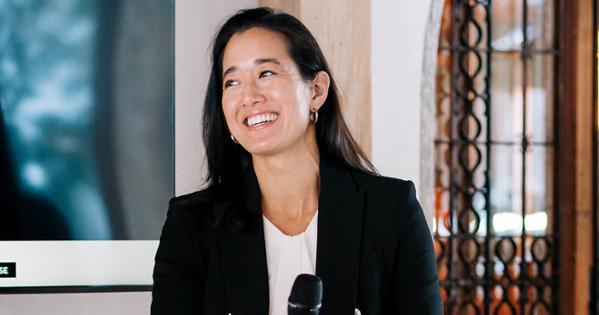
Melanie Nakagawa ’05 has built a career at the intersection of law, policy, and global sustainability, taking her from Capitol Hill to the White House and now to the private sector as chief sustainability officer at Microsoft. At the core of her work is a foundation shaped at American University Washington College of Law.
Nakagawa describes her experience at American University as transformative, noting that Washington, D.C., served as an extension of the classroom, where internships, events and proximity to global institutions brought policy to life.
“My time at American University was hugely formative in how I built my career,” she said. “I was constantly learning what policy looks like in practice.”
Faculty mentorship and hands-on experience were equally influential. Nakagawa points to her work with the Sustainable Development Law and Policy Brief as a defining moment.
“It wasn’t just a chance to write about issues I cared about. It was a chance to build something,” she said, noting that with support from professors such as Durwood Zaelke, David Hunter, and Ken Markowitz, the student-led publication grew into a lasting platform for environmental law discourse. “They treated us as real partners and opened their networks, helping create something that inspired other students to pursue environmental law.”
In hindsight, she sees those experiences as early lessons in leadership, particularly the importance of building something that lasts.
“You start to think about how to create something durable,” she said, “so that when you move on, what you’ve built continues to thrive.”
A pivotal moment early in her career came while working in the U.S. Senate on cap-and-trade legislation.
“That was when it crystallized for me that climate policy touches everything,” she said, explaining that “You can’t treat climate and energy as separate issues if you want real results.”
That insight carried into her work at the U.S. Department of State, where she saw how domestic energy decisions could influence global emissions and international policy.
During her time at the State Department, Nakagawa also played a role in shaping how climate change was integrated across the agency’s work, helping develop guidance that connected climate policy to issues ranging from national security to human rights.
“Solving climate change isn’t about choosing between sectors,” she noted. “It’s about tackling emissions across the entire system.”
Her legal training continues to shape her approach.
“Law school taught me to take something that feels overwhelming and break it down into workable parts,” she explained. It also sharpened her ability to communicate clearly. “If the language isn’t clear, it’s hard to build alignment, and it’s even harder to implement.”
Government service reinforced another key lesson.
“I learned how important it is to understand what drives people and what makes issues a priority,” she said, noting the power of convening. “Successful discussions start with finding common ground, and from there, you can build coalitions and move toward practical solutions.”
At Microsoft, Nakagawa applies those same principles on a global scale. She sees technology companies as essential to advancing sustainability.
“Technology can have an outsized impact when it is paired with strong policy, smart investment and collaboration,” she said.
Her work now also offers a front-row seat to how rapidly evolving technologies, particularly artificial intelligence, are shaping the future of sustainability and global problem-solving.
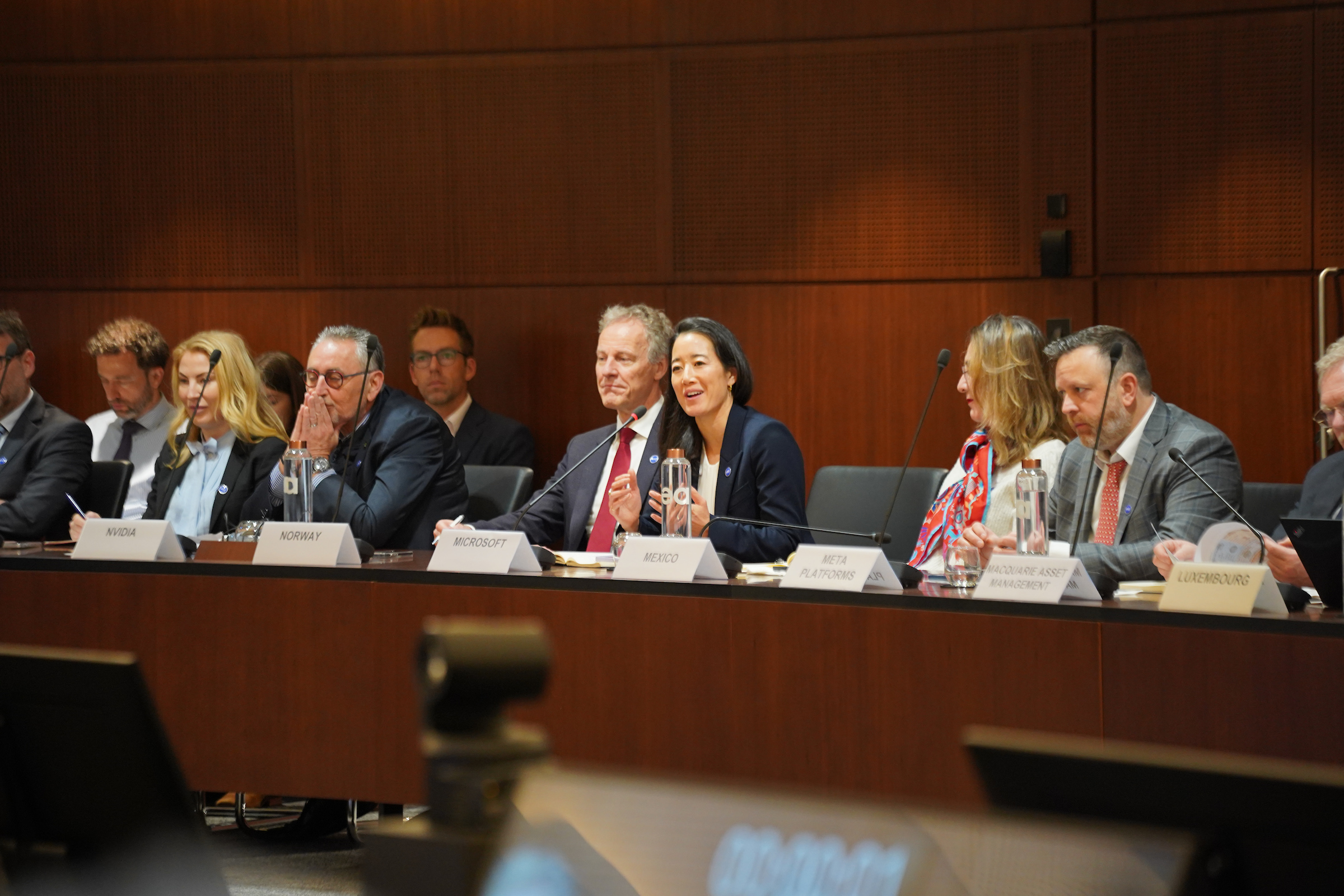
Microsoft’s approach is both internal and external, focused on reducing the environmental impact of its own operations while helping others do the same. From matching 100% of its global electricity use with renewable energy to investing in emerging climate technologies through its $1 billion Climate Innovation Fund, the company is helping accelerate progress. Still, Nakagawa emphasizes that no single sector can solve climate change alone.
“Real progress happens when all of these pieces come together,” she explained. “Climate progress only happens at scale when these sectors move together. Government sets direction, investors scale solutions and companies bring innovation into practice. The greatest opportunities are where those pieces align.”
Despite the scale of the challenge, Nakagawa remains optimistic.
“What keeps me inspired is seeing things that once felt impossible become reality,” she said. “When we get the right people at the table, we can make faster progress than we think.”
For current AU students, her advice is clear.
“Prioritize relationships with classmates and professors,” she advises. “Gain hands-on experience early and remain open to unexpected paths.”
She also encourages students to embrace the evolving role of technology in their work. “It’s about how you use tools to improve what you do,” she said, noting that the most effective professionals will be those who can combine strong foundational skills with new technologies.
“Internships give you a front-row seat to how policy and advocacy actually work,” she emphasized. “Most careers are not a straight path. They are a patchwork of experiences that eventually come together.”
Outside of work, Nakagawa finds balance in time with her family and in the natural beauty of the Pacific Northwest.
“Spending time with my family is what truly helps me recharge and stay grounded,” she said. “Those moments are a reminder of why I care so much about protecting the environment for future generations.”
From her days at AUWCL to her leadership on the global stage, Nakagawa’s journey reflects a commitment to building a more sustainable future.
“When we work together,” she said, “we can make meaningful progress against our shared sustainability goals.”