You are here: American University Washington College of Law Impact Initiatives Programs Hracademy News Human Rights Day - December 10, 2025

Academy on Human Rights and International Humanitarian Law

WCL

Human Rights Day - December 10, 2025

A year of work culminating in a day of celebration: our contributions to the promotion and protection of Human Rights.

By  | 

Human Rights Day: A Call to Hope and Action

A year of work culminating in a day of celebration: our contributions to the promotion and protection of Human Rights.


The Academy on Human Rights and International Humanitarian Law of the American University Washington College of Law observes International Human Rights Day by renewing our steadfast commitment to the advancement and protection of human rights. We are honored to highlight the work carried out throughout 2025 efforts that reflect our enduring dedication to fostering justice, equality, and the recognition of every individual’s inherent dignity.

Today, we pause to reflect not only on the progress made but on the principles that continue to unite humanity: the belief that every person, everywhere, is entitled to live freely and with respect. Human Rights Day stands as a reminder that our collective pursuit of fairness and equality is ongoing, an effort that transcends borders, generations, and disciplines.

On this Human Rights Day, we recognize the distance we have traveled, but more importantly, we renew our determination for the road ahead. Let awareness guide our purpose and let persistence shape our impact. Together, we can ensure that human rights move beyond aspiration and into lived experience for all people.

Since 1948, when the Universal Declaration of Human Rights first set a global standard for dignity and freedom, the world has taken important steps toward realizing its promise. Yet, for countless individuals, those rights remain out of reach. Behind every legal victory or reform are real lives seeking justice and recognition. This day challenges us to look beyond achievements and confront what remains undone because human rights are not ideals to admire, but obligations to fulfill.

Today, we renew our shared responsibility to uphold and defend the rights of every person. For no matter one’s origin, identity, or circumstance, human rights are universal, inalienable, and essential to the very fabric of our humanity.

Global Impact

HRD Honduras
Professor Claudia Martin's keynote lecture titled: “Mainstreaming Human Rights and Gender Perspective in Judicial Functions.”

On November 26–27 as part of the 16 Days of Activism Initiative, the Academy on Human Rights and International Humanitarian Law at American University, Washington College of Law, together with the Supreme Court of Justice of Honduras, OPTIO, and the Justice and Gender Observatory, held the first Training on Human Rights and Gender Perspective for the Administrative-Contentious jurisdiction of the Honduran Judiciary.

Professor Claudia Martin, Co-Director of the Academy, opened the sessions with a keynote lecture titled: “Mainstreaming Human Rights and Gender Perspective in Judicial Functions.”

Ensuring human rights in times of crisis and corporate power - Colombia and the world facing the same challenge ENG HRD
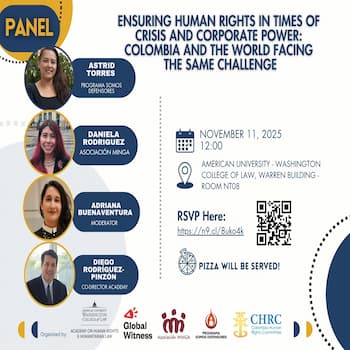
Ensuring Human Rights in Times of Crisis and Corporate Power: Colombia and the World Face the Same Challenge

On November 11, 2025, the Academy hosted the panel “Ensuring Human Rights in Times of Crisis and Corporate Power: Colombia and the World Face the Same Challenge.” Professor Diego Rodriguez-Pinzon presented opening remarks, and the event was co-sponsored by Global Witness, Asociación Minga, Somos Defensores, and the Colombia Human Rights Committee (CHRC), and provided a vital space to examine the increasing risks faced by human rights defenders amid rising corporate influence, ongoing violence, and global obstacles to the effective protection of fundamental rights.

Read more here.

Flyer Panel Nicaragua EN VF
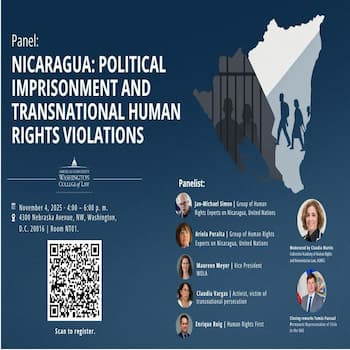
Nicaragua: Political Imprisonment and Transnational Human Rights Violations

On November 4, 2025, the Academy in collaboration with AUWCL LLM candidate Alexandra Salazar organized the panel "Nicaragua: Political Imprisonment and Transnational Human Rights Violations." The panel analyzed patterns of political imprisonment and transnational human rights violations committed by the Nicaraguan government against individuals it deems opponents of the government's will such as extrajudicial killings and the instrumentalization of international mechanisms such as INTERPOL notices, migration alerts, and financial restrictions. The discussion also addressed political imprisonment and enforced disappearance as tools of social control used to instill fear, as well as the criminalization of dissent, confiscation of property and pensions, revocation of nationality, and the erasure of civil records, even those of relatives.

Releg Event Group Photo Resized HRD
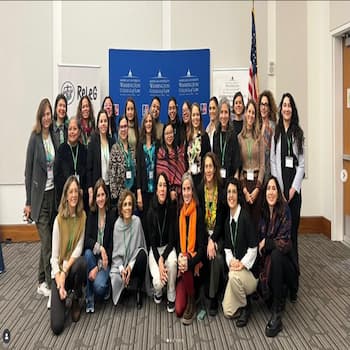
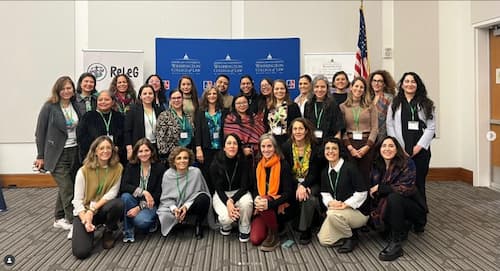
4th Discussion Roundtable on Strategic Litigation on Gender-Based Violence in Latin America

On October 30 and 31, 2025, the Academy on Human Rights and Humanitarian Law and the War Crimes Research Office at American University Washington College of Law hosted the 4th Discussion Roundtable on Strategic Litigation on Gender-Based Violence in Latin America of the Latin American Network for Gender-based Strategic Litigation (ReLeG).  The event was made possible thanks to the support of the ACTUEMOS initiative of UN Women and the European Union, which seeks to strengthen women’s participation in global and regional spaces and foster transformative feminist action to eliminate violence against women. 

Read more here.

HRD Venezuela Flag
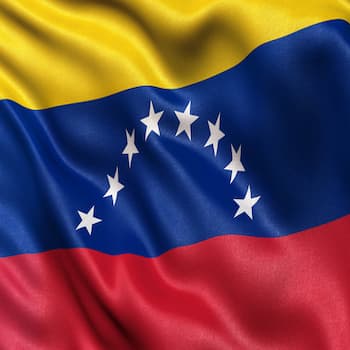
Private Working Session on the Situation of Human Rights in Venezuela and the Role of the Inter-American System

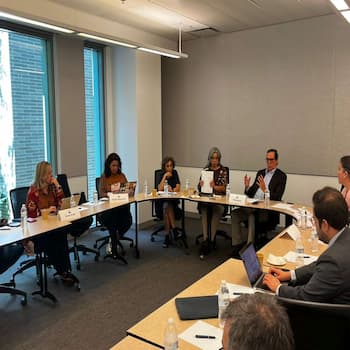
On October 29, 2025, the Academy hosted a private dialogue between the IACHR and Venezuelan civil society. This space aims to foster strategic dialogue at a critical moment for the region. The recent decision of the Inter-American Court of Human Rights in the case Chirinos Salamanca v. Venezuela confirmed its jurisdiction to hear cases related to Venezuela, opening a new avenue for access to Inter-American justice and reaffirming the role of the Inter-American Human Rights System in addressing the human rights crisis in the country.

This underscores the need for the Inter-American Human Rights System—and particularly the IACHR—to play an even more central role in the protection of human rights, as demonstrated by recent actions of the Commission, the Secretariat for Strengthening Democracy, and the OAS General Secretariat.

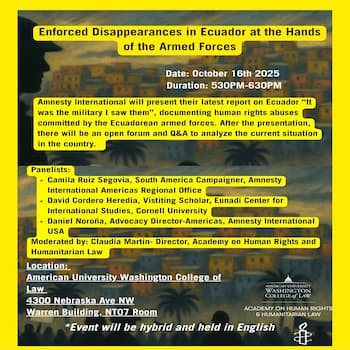
Enforced Disappearances in Ecuador at the Hands of the Armed Forces

On October 16, 2025, the Academy organized the panel “Meeting assets to discuss the report on Disappearances in Ecuador at the hand of the Armed Forced – Amnesty International,” focusing on Amnesty International’s report on enforced disappearances in Ecuador. Panelists from Amnesty International and academia analyzed enforced disappearances linked to President Noboa’s Plan Fénix, the militarization of public security, and U.S. security assistance. Speakers examined obstacles to justice, threats to judicial independence, shrinking civic space, and regional authoritarian trends across Latin America, urging continued monitoring.

HRD Yepes
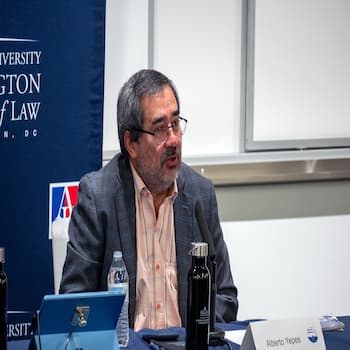
Assessment of the Human Rights Situation in Colombia – A Conversation with Alberto Yepes

The Academy on Human Rights and Humanitarian Law at the American University Washington College of Law, Colombian Human Rights Network (CHRN), Amazon Watch, Colombia Human Rights Committee, and the Colombia Human Rights Network co-hosted an in-depth conversation titled “Assessment of the Human Rights Situation in Colombia” with Alberto Yepes, Colombian human rights defender, researcher, and coordinator of the Observatory for Human Rights and International Humanitarian Law of the CCEEU. Prof. Diego Rodriguez-Pinzon, Codirector of the Academy presented opening remarks to this event.

Read more here.

Concepcion HRD
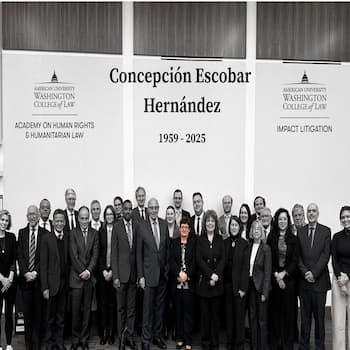
The Academy Honors the Life and Legacy of Professor Concepción Escobar Hernández

The Academy on Human Rights and Humanitarian Law at American University Washington College of Law remembers Dr. Concepción Escobar Hernández, who passed away on August 28, 2025, in Madrid. A renowned jurist, scholar, and diplomat, she advanced international law, human rights, and accountability through her work in the UN International Law Commission as Special Rapporteur on immunity of state officials. As an adjunct professor and conference participant at AUWCL, she inspired generations of students, leaving a profound intellectual and human legacy around the world today.

HRD Rosenthal
Can the courts protect people with disabilities and other At-risk groups? Domistic and International Challenges

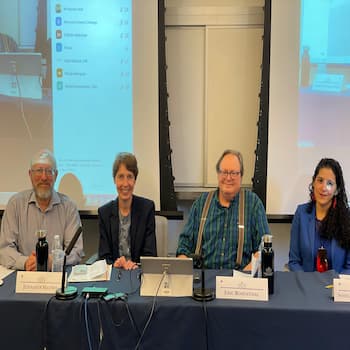
On September 18, 2025, the Academy on Human Rights and Humanitarian Law and the LL.M. Program hosted the panel “Can the Courts Protect People With Disabilities and Other At-Risk Groups? Domestic and International Challenges.”

The discussion featured distinguished speakers: Prof. Eric Rosenthal (Founder & Executive Director, DRI; AUWCL Professor; Prof. Robert Dinerstein (Professor of Law Emeritus, AUWCL), Sofía Galván Puente (Senior Advisor, University Network for Human Rights), and Jennifer Mathis (Deputy Director, Bazelon Center for Mental Health Law, ex DOJ).

HRD Afghanistan
OAS Member States Explore Legal Action on Taliban Abuses Against Afghan Women

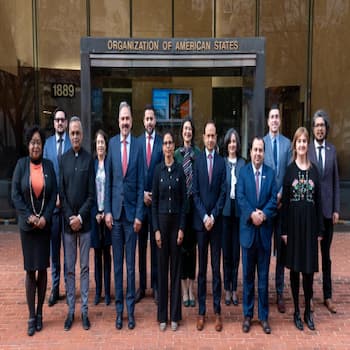
On September 11, 2025, American University Washington College of Law hosted the working session “OAS Member States Explore Legal Action on Taliban Abuses Against Afghan Women,” bringing OAS permanent missions together to examine a potential ICJ case under CEDAW against the Taliban regime. Participants reviewed the system of “gender apartheid” imposed on Afghan women and girls, heard testimony relayed by Afghan civil society about abduction, torture, and denial of healthcare and education, and discussed regional support, evidence-gathering, and solidarity from states across the Americas, to reinforce CEDAW compliance.

Read more here.

Guatemala HRD
Closed Session on the Advisory Opinion that the State of Guatemala submitted to the Inter-American Court of Human Rights concerning democracy and its protection within the Inter-American Human Rights System

On September 9, 2025, the Academy on Human Rights and International Humanitarian Law had the privilege of organizing a private session with international law scholars, representatives of permanent missions of OAS member states, and civil society organizations. This was held in the context of Guatemala’s request for an Advisory Opinion on democracy and its protection under the Inter-American Human Rights System, submitted to the Inter-American Court of Human Rights (IACHR Court). The strategy behind the event was to bring together efforts for the submission of amicus briefs and other advocacy activities.

HRD EU Flyer
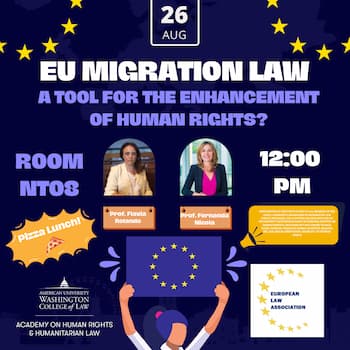
EU Migration Law: A Tool for the Enhancement of Human Rights?

On August 26th, 2025, the Academy in collaboration with the WCL European Law Association participated in the event, "EU Migration Law: A Tool for the Enhancement of Human Rights?" This event examined the potential of EU migration law as a mechanism for safeguarding the rights of migrants, asylum seekers, and refugees, while critically assessing its limitations. We considered whether legal frameworks at the EU level can balance state sovereignty with human dignity, and what reforms are necessary to shift from control-driven approaches toward a rights-centered system.

HRD OAS Independent Panel Presentation
New Publication: Key Findings — Analysis of Public and Confidential Reasoned Votes in the Reports of the IACHR

We are pleased to share research conducted by Professor Claudia Martin together with Víctor Abramovich, Nicole Levy, and Carmen Ponce Moreda, research assistant at the Academy on Human Rights and International Humanitarian Law. The study analyzed the use of reasoned votes by Commissioners of the IACHR throughout its institutional history. Their report included an analysis of reasoned votes in: country, thematic, and annual reports; final reports adopted under Article 51 of the American Convention on Human Rights; and reports adopted under Article 50 of the same treaty that refer cases to the Inter-American Court of Human Rights.

HRD GW&SGBV
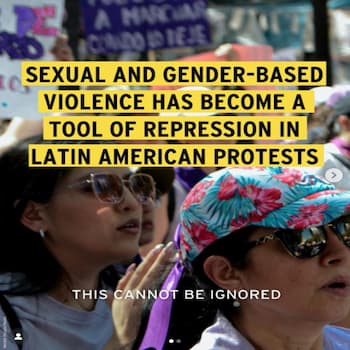
Global Week Against Torture 2025: Breaking the silence: Sexual Violence in Social Protests Across Latin America

On June 25, 2025, the virtual panel “Breaking the Silence: Sexual Violence in Social Protests Across Latin America,” organized by REDRESS, the Academy on Human Rights and Humanitarian Law at AUWCL, and ReLeG, examined how sexual and gender-based violence is deployed to silence dissent. Panelists presented a regional report on abuses in protests, recalled the Atenco judgment, and analyzed sexual violence as torture or cruel, inhuman, or degrading treatment, stressing intersectional impacts, persistent impunity, structural documentation gaps, and the urgent need to reframe international law. 

The event was part of the global week against torture organized by OMCT.

Read the report here.

HRD Human Trafficking
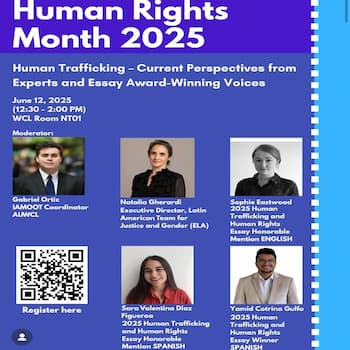
Human Trafficking-Current Perspectives from Experts and Essay Award-Winning Voices

On June 12, 2025, the Summer Program of Advanced Studies wrapped up this year's speaker series with the panel "Human Trafficking - Current Perspectives from Experts and Essay Award-Winning Voices." For 2025, the Academy chose Human Trafficking as our annual topic, and panelists included Prof. Natalia Gherardi, and this year's Human Rights Essay winners: Sara Valentina Diaz Figueroa, and Yamid Cotrina Gulfo who presented their essays to the Summer Program participants, guests, faculty, and staff at WCL. The panel was moderated by the Coordinator of the Essay Award, Gabriel Ortiz.

Watch the event here.

Safety at what cost_ The rise of private security in Latin America
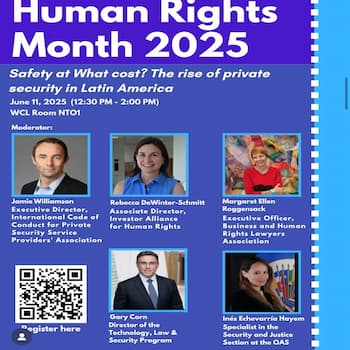
Safety at what cost? The Rise of Private Security in Latin America

On June 11, 2025 as part of the speakers series during the Summer Program of Advanced Studies, the Academy hosted the panel "Safety at what cost? The Rise of Private Security in Latin America." The panelists explored how oversight, investment, and technology can help reshape private security in Latin America, who is responsible - and how we make this industry part of the solution.

Panelists included: Prof. Gary Corn, Rebecca DeWinter-Schmitt, Prof. Margaret Ellen Roggensack, and Ines Echevarria Hayem. This panel was moderated by Prof. Jamie Williamson.

Watch the event here.

HRD Authoritarianism, Emergency Powers and the Rise of Absolute Rule
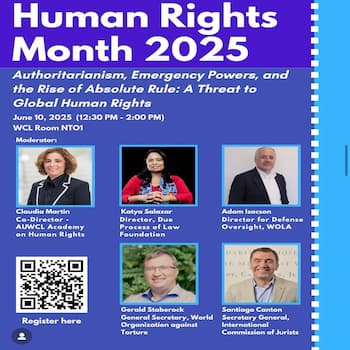
Authoritarianism, Emergency Powers and the Rise of Absolute Rule

On June 10, 2025, the Academy organized a timely panel, “Authoritarianism, Emergency Powers, and the Rise of Absolute Rule: A Threat to Global Human Rights,” moderated by Professor Claudia Martin. Santiago Cantón, Gerald Staberock, Katya Salazar, and Adam Isacson examined how emergency powers, weakened rule of law, and democratic backsliding, from Europe to the Americas, normalize authoritarian practices and rights abuses, urging collective action to defend democracy, document violations, and counter disinformation in every region.

Watch the event here.

HRD ASIL
Current Issues in the International Law Commission: The View from Inside

On June 9, 2025, the American Society of International Law (ASIL) welcomed the Academy to co-host the panel “Current Issues in the International Law Commission: The View from Inside,” at Tillar House in Washington, D.C., to examine sea-level rise and the immunity of State officials. Ambassador Juan José Ruda Santolaria presented the International Law Commission work on sea-level rise, highlighting support for preserving existing maritime baselines, guaranteeing the continuity of statehood for low-lying and small island States, and strengthening protections for people displaced by climate change. Dean Emeritus Claudio Grossman explained the complexities inherent in balancing the sovereign equality of States and the necessity of ensuring accountability for grave international crimes, and reaffirmed that the ILC’s work on the immunity of State officials represents a significant contribution to the development and codification of international law.

Read more here.

HRD Congo
An Examination of the Humanitarian Response and Human Rights consideration in relation to the armed conflict in the Democratic Republic of the Congo

On June 6, 2025, The Academy hosted a screening of the documentary, "A Silent War: Stories of Human Suffering and Resilience in Congo" by Voice of America Africa and panel discussion titled "An Examination of the Humanitarian Response and Human Rights consideration in relation to the armed conflict in the Democratic Republic of the Congo." The panel explored how the international community can respond to this ongoing crisis - supporting efforts to end the violence, address mass displacement, and promote a sustainable path to peace. 

Watch the event here.

HRD Current Challenges and opportunities in Inter-American Human Rights System
Current Challenges and Opportunities in Inter-American Human Rights System

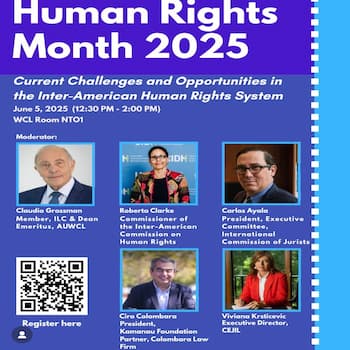
On June 5, 2025, the Academy on Human Rights and Humanitarian Law hosted the panel “Current Challenges and Opportunities in the Inter-American Human Rights System,” a debate on the resurgence of authoritarianism, technological disruption, and the long wait for justice faced by victims. Claudio Grossman, Roberta Clarke, Carlos Ayala, Ciro Colombara, and Viviana Krsticevic examined backlog, democratic erosion, and emerging risks from AI and neurotechnology, stressing that political will, inclusive strategies, and responsible innovation can preserve and strengthen the Inter-American System and its role in the OAS and the hemisphere.

Watch the event here.

HRD CEDAW The International Court of Justice as a Forum to Pursue State Accountability for the Systematic Discrimination of women and girls in Afghanistan
CEDAW The International Court of Justice as a Forum to Pursue State Accountability for the Systematic Discrimination of women and girls in Afghanistan

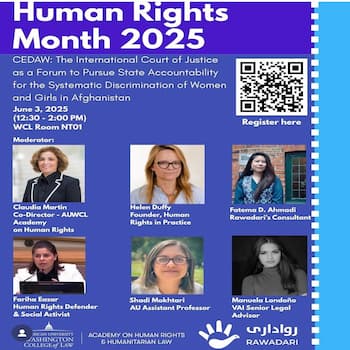
On June 3, 2025, in collaboration with Rawadari, the Academy hosted the panel "CEDAW: The International Court of Justice as a Forum to Pursue State Accountability for the Systematic Discrimination of Women and Girls in Afghanistan." The panel discussed the potential case against Afghanistan before the ICJ under the Convention on the Elimination of All Forms of Discrimination Against Women (CEDAW). This would be the first time a country is taken to the ICJ for violating this pivotal women's rights Convention.

Watch the event here.

HRD Cinema and Human Rights
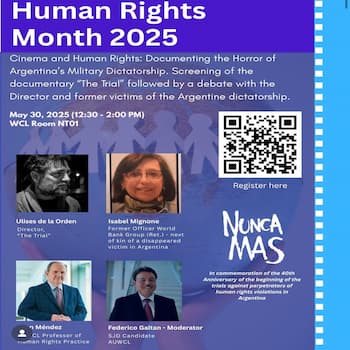
Cinema and Human Rights: Documenting the Horror of Argentina's Military Dictatorship & Screening of the documentary "The Trial" followed by a debate with the Director and former victims of the Argentine dictatorship

On May 30, 2025, in commemoration of the 40th anniversary of the beginning of the trials against the perpetrators of Argentina's last military dictatorship, the Academy hosted the panel "Cinema and Human Rights: Documenting the Horror of Argentina's Military Dictatorship" which included a screening of the documentary "The Trial" followed with a debate with the movie's director, Ulises de la Orden. The following discussion, moderated by Federico Gaitan Hairabedian, SJD Candidate at WCL, included: Prof. Juan Mendez and Isabel Mignone-del Carri. 

Watch the event here.

HRD Final Report CIDH IAHRS
Final Report of the independent Panel to Evaluate Candidates for the CIDH-IACHR Bodies 2025

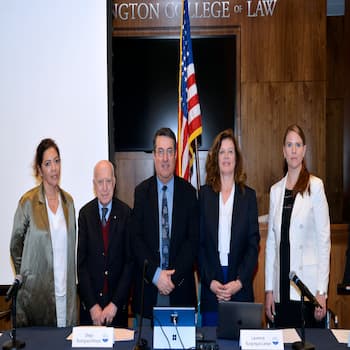
On May 29, 2025, the Academy on Human Rights and Humanitarian Law at AUWCL organized the event “Final Report of the Independent Panel to Evaluate Candidates for the IAHRS Bodies 2025.” The discussion highlighted the Panel’s role in strengthening transparency and merit in the election of members to the Inter-American Commission. Panel members and Secretariat representatives outlined the rigorous review process, criteria for integrity and independence, engagement with civil society, and the Panel’s impact on promoting diverse, accountable, legitimate leadership within the Inter-American System. The Panel presented its observations regarding candidates eligibility for the IACHR for the 2025-2029 period.

Read the report here.

HRD Human Rights and Global Governance: Assessing Multilateralism in Times of Crisis
Human Rights and Global Governance: Assessing Multilateralism in Times of Crisis

On May 28, 2025, the Academy on Human Rights and Humanitarian Law opened Human Rights Month with the hybrid panel “Human Rights and Global Governance: Assessing Multilateralism in Times of Crisis,” part of its Summer Program. Diego Rodríguez-Pinzón, Elizabeth Salmon, Laurence Burgorgue-Larsen, Gloria Gaggioli, and Fausto Pocar reflected on the evolution and current strain of UN human rights bodies and the Human Rights Council, warning of polarization and implementation gaps while underscoring academia, civil society, and democratic states as key to defending global multilateralism today.

Read more here.

HRD Law Review Publication
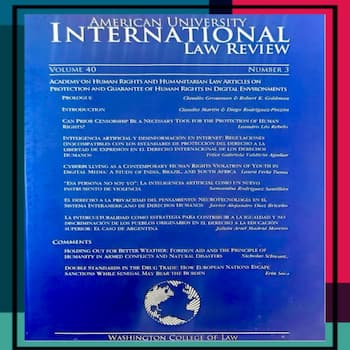
Publication of the Human Rights Essay Award in the American University International Law Review

The Academy on Human Rights and Humanitarian Law is proud to present Volume 40, Number 3, of our annual Human Rights Essay Award publication, produced in collaboration with the American University International Law Review. After a year of editorial work, we are thrilled to add this new volume to our collection—an annual tradition the Academy has sustained since 2005, covering a broad range of topics from the prohibition of torture to transitional justice and other key issues in international human rights law.

HRD Moot Court Podcast
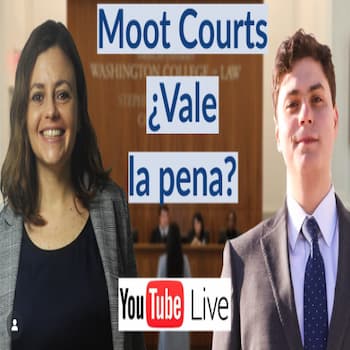
Moot Court ¿Vale la pena? Podcast

As part of our 30th Anniversary celebration of #IAMOOT, the IAMOOT Coordinator, Gabriel Ortiz, held a special YouTube Live with Patricia Tarre, an attorney specialized in international human rights law with many years of experience working at the Inter-American Court of Human Rights. The conversation took place through Estudia Derechos Humanos, an educational platform developed by Patricia that actively promotes knowledge of International Human Rights Law and the Inter-American System.

Listen to the Podcast on Spotify here.

HRD Social Protest and Gender-based Sexual Violence
Dialogue on Social Protest and Sexual and Gender Based Violence

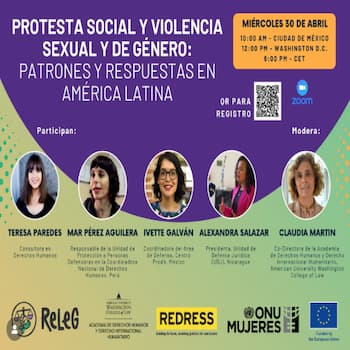
On April 30, 2025, the Academy participated in a dialogue on social protest and sexual and gender-based violence, focused on the Latin American regional context. Panelists included Alexandra Salazar, an LLM candidate at WCL, Teresa Paredes, Mar Perez Aguilera, and Ivette Galvan with Prof. Claudia Martin moderating. The panelists shared their perspectives on the use of sexual and gender-based violence as mechanisms of state repression in contexts of social protest. Sexual violence is part of a strategy of control and silencing that seeks to discourage participation in public spaces, and this dialogue made this issue visible and promoted collective strategies to prevent and eradicate it.

HRD Women's Equal Participation in International Leadership & Decision-Making
Panel on Women's Equal participation in International Leadership and Decision-Making

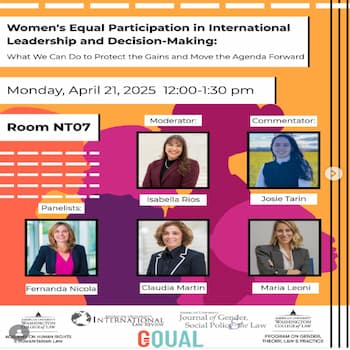
On April 21, 2025, Prof. Claudia Martin participated on the panel "Women's Equal Participation in International Leadership and Decision-Making: What We Can Do to Protect the Gains and Move the Agenda Forward". The panelists explored the critical importance of women’s equal and inclusive participation in international leadership and decision-making. The discussion offered diverse perspectives from across the international sphere, highlighting both the progress made and the challenges that remain. The conversation took place within the context of recent landmark legal developments, such as CEDAW’s GR 40, which defines parity as both a legal principle and a rule of good governance. The panel presented data on women’s representation in international forums, examine the legal foundations of equal representation in international law, and discuss the necessary steps to safeguard recent gains and advance further progress.

HRD As A Feminist Lawyer Told Me
Powerful Initiative led by Six LL.M. Women Students: Launch of the podcast “As a Feminist Lawyer Told Me”

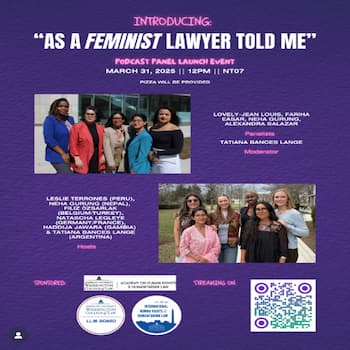
On March 31, 2025, the Academy and American University hosted the launch of the student-led podcast “As a Feminist Lawyer Told Me,” created by six LL.M. women from Peru, Nepal, Belgium/Turkey, Germany/France, Gambia, and Argentina. The podcast examines how feminism and law influence women’s lives across various aspects, including work, family, identity, and autonomy. The event highlighted cross-border solidarity, diverse feminist perspectives, and a shared commitment to challenging discriminatory norms and envisioning more inclusive legal futures, while celebrating students’ leadership, creativity, and global collaboration in the Americas and across the globe.

HRD Beyond the Barbed Wire
Beyond Borders: The Impact of Statelessness and Discrimination in Nationality Laws

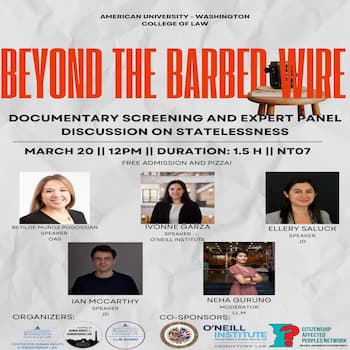
On March 20, 2025, the Academy hosted the event “Beyond Borders: The Impact of Statelessness and Discrimination in Nationality Laws,” organized by the Academy on Human Rights and Humanitarian Law, the Human Rights Center, and the LL.M. Board. The event was specifically focused on the situation of statelessness in Nepal, which has a major gender-based discrimination approach.

Following the screening of Beyond the Barbed Wire, panelists linked discriminatory, gendered nationality rules to statelessness, highlighting women’s unequal ability to transmit nationality, litigation strategies, limits of existing remedies, and the urgent need for gender-equal, non-discriminatory nationality laws that protect families and uphold fundamental human rights.

Watch the documentary here.

HRD Power Works Better When EQUAL
Beyond Borders: The Beyond Representation: International Law, Women's Leadership, and Advancing Equality of Statelessness and Discrimination in Nationality Laws

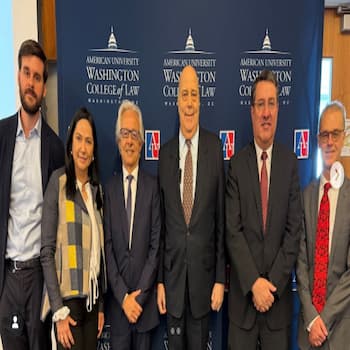
On March 10, 2025, Prof. Claudia Martin moderated a panel titled "Beyond Representation: International Law, Women's Leadership, and Advancing Equality" with two outstanding and distinguished women speakers, Ana Pelaez, former Chair of the CEDAW Committee and Claudia Flores, Vice-Chair of the Working Group on Discrimination against Women and Girls. This was an excellent event that kicked off GQUAL's 10th Anniversary.

HRD Experts Debate Drug Policies in Colombia and the US
Experts Debate Drug Policies in Colombia and the US

On February 28, the Academy on Human Rights and Humanitarian Law, together with the Embassy of Colombia and Universidad Externado de Colombia, hosted a panel on “Drug Policy in Colombia and the U.S.: Results, Impacts, and Human Rights.”

Moderated by Andrés González Díaz and with Codirector of the Academy, Prof. Diego Rodriguez-Pinzon offering opening remarks, experts, including Ambassador Daniel García-Peña, Irene Cabrera, John Walsh, Juan Pappier, and Viancy Ortiz, examined bilateral strategies against drug trafficking, structural drivers such as poverty, legal reforms, debates on legalization, and border cooperation with Ecuador, underscoring the need for rights-based drug policies.

HRD Del Poder Ejecutivo
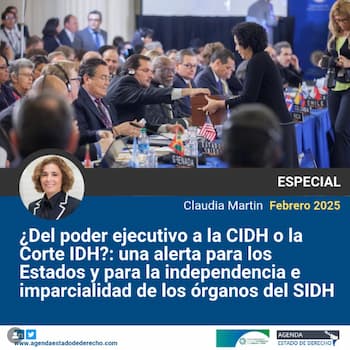
¿Del poder ejecutivo a la CIDH o la Corte IDH?: una alerta para los Estados y para la independencia e imparcialidad de los órganos del SIDH

On February 20, 2025, Professor Claudia Martin, Co-Director of the Academy on Human Rights and International Humanitarian Law, analyzed in her latest article in Agenda Estadode Derecho the concerns of the SIDH Panel regarding the independence and impartiality of the members of the IACHR and the Inter-American Court of Human Rights.

Read the article here.

HRD Amicus Venezuela
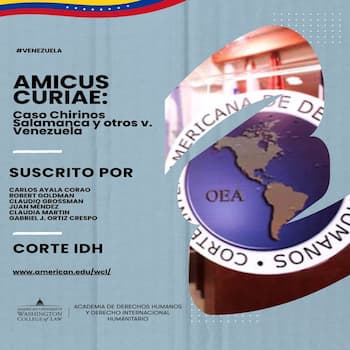
Amicus Curiae: Caso Chirinos Salamanca y otros v. Venezuela

Professors and human rights law experts from WCL submitted an amicus curiae brief to the Inter-American Court of Human Rights in the case Chirinos Salamanca et al. v. Venezuela. The document was signed by Professors Carlos Ayala, Robert Goldman, Claudio Grossman, and Juan Méndez, renowned experts in Inter-American Law and former members of the IACHR, as well as by Professor Claudia Martin, Co-Director of the Academy, and Gabriel Ortiz Crespo, Coordinator of IAMOOT at AUWCL, who has experience in Inter-American litigation and the situation in Venezuela. 

The amicus brief sought to justify how the Inter-American Court of Human Rights could still exercise jurisdiction over Venezuela despite that country’s denunciation of the American Convention in 2012. On August 21, 2025, the Inter-American Court issued its judgment in the case, in which it affirmed the Court’s jurisdiction. The arguments presented in our amicus brief were included.

Read the Amicus here.

HRD ¿Quien debería liderar la Secretaria General de la ONU en los próximos cinco años
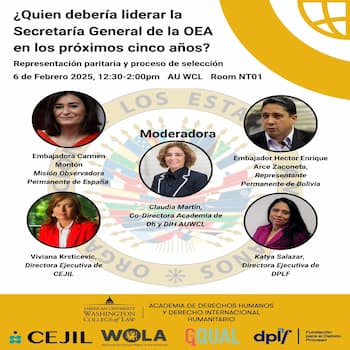
Who Should Lead the OAS General Secretariat in the Next Five Years? Gender Parity and the Selection Process

On January 27, 2025, American University Washington College of Law hosted the panel “Debate on the Future of the OAS Secretary General: Gender Parity and Selection Process,” where ambassadors, experts, and students examined opaque selection rules, the historic absence of women in the top posts, and the need for clear, binding criteria.

Speakers urged a transparent, inclusive, gender-balanced process that reflects the hemisphere’s diversity and strengthens the OAS’s legitimacy as a human rights actor ahead of the March 10, 2025, election for the Secretary General. In May, a few months after this conference, Laura Gil, colombia diplomat, was elected as the first woman to serve as OAS Assistant Secretary General.

HRD Los Niveles de Violencia Extrema
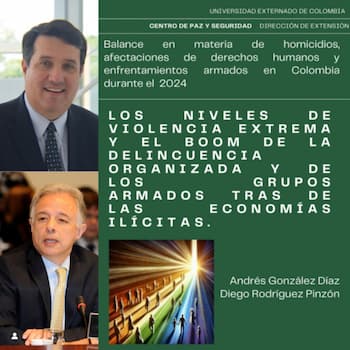
The BOOM of organized crime and armed groups has maintained high levels of violence in 2024: Assessment of homicides, impact on human Rights and armed confrontations in Colombia in 2024

Our Co-Director, Prof. Diego Rodriguez-Pinzon published, with International Visiting Scholar, Prof. Andres Gonzalez, the research essay “The BOOM of organized crime and armed groups has maintained high levels of violence in 2024: Assessment of homicides, impact on human Rights and armed confrontations in Colombia in 2024".

Prof. Rodriguez-Pinzon was invited to participate in this research initiative, which is part of the academic cooperation agreement between AUWCL and the Universidad Externado de Colombia in Bogotá. The essay was released in December 2024.

Read the essay here.

HRD Violencia de Genero en la Movilidad
Gender-Based Violence in Mobility: A Regional Challenge, A Collective Commitment

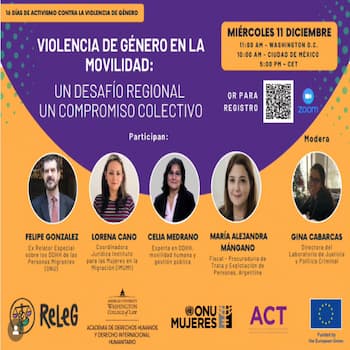
On December 11, 2024, the Academy on Human Rights and Humanitarian Law and ReLeG hosted the panel “Gender-Based Violence in Mobility: A Regional Challenge, A Collective Commitment,” part of a series on strategic litigation in Latin America. Within the ACTUEMOS initiative led by UN Women and the European Union, moderator Gina Cabarcas guided a conversation with experts Felipe González, Lorena Cano, Celia Medrano, and María Alejandra Mangano on gender-based violence, trafficking, and barriers to justice faced by women and girls in mobility across the region.

Activities of the Copresidents and Co-directors

Co-Directors and Co-Chairs

Prof. Grossman ResizedProf. Claudio Grossman

On March 5, 2025, in commemoration of International Women’s Day, the Kovler Project Against Torture (KPAT), a WCL program of the Center for Human Rights and Humanitarian Law hosted the conference, “Women, Torture, and the Law: International Human Rights Responses” - a compelling event that examined the intersection of gender, torture, and international human rights law. The event featured two thought-provoking panels – “Hostage-Taking, Torture, and Women: Perspectives Under International Law” and “Torture and Detention in Latin American: Challenges and Responses of International Human Rights Law.” Professor Grossman, founder of the KPAT, sat on the first panel, “Hostage-Taking, Torture, and Women: Perspectives Under International Law” with Professor Diego Rodriguez-Pinzon acting as moderator. The KPAT and its corresponding class on Torture Prohibition in International Law are taught by Professor and Dean Emeritus Claudio Grossman, former Chair of the UN CAT, and supported by Assistant Director to the Project Marta Treviño-Leyva. Kovler Student Scholars engage in a “deep dive” on the prohibition of torture in international law and on the professional skills and considerations instrumental to effective lawyering in international settings. Read more about the KPAT here.

On June 5, 2025, Professor Claudio Grossman participated as a panelist in a comprehensive discussion analyzing the significant institutional challenges currently facing the Inter-American Human Rights System. The event brought together leading experts to examine pressing issues including fluctuating state commitment across the region, persistent case processing delays, and systemic difficulties in implementing the System's decisions and recommendations. Professor Grossman contributed his substantial expertise to propose concrete institutional responses and strategic approaches to strengthen the System's effectiveness and authority in protecting human rights throughout the Americas. Watch the event here.

On June 9, 2025, Professor Grossman participated as a panelist in "Current Issues in the International Law Commission: The View from Inside," an event co-hosted by the American Society of International Law and the Academy. In his capacity as the Special Rapporteur on Immunity of State Officials from Foreign Criminal Jurisdiction at the ILC, he provided a detailed analysis of his groundbreaking work on this complex topic. Professor Grossman presented his latest report, which advances the progressive development of international law by proposing meaningful limits to immunity for severe international crimes, including slavery and aggression, sparking vibrant discussion among attendees. Read more here.

On September 6, 2025, Professor Grossman was interviewed by El País, where he stated that the Government of Chile should apologize to the victims of child abductions that took place between 1970 and 1990.

Professor Grossman became involved in Chile’s irregular adoption cases after meeting a student in his class who discovered he had been trafficked from Chile as an infant. Deeply moved, Grossman agreed to take the case and went on to represent dozens of similarly affected individuals as a plaintiff before Chilean courts. He has since played a central role in pushing for progress in the investigations, arguing that the systematic theft of children between the 1970s and 1990s constitutes crimes against humanity. Grossman advocates for a comprehensive national response that includes not only criminal accountability but also reparations, recognition, and an official apology from the State of Chile for failing to protect the victims. Read the article here.

On September 9, 2025, Impact Litigation, a program of the Center for Human Rights and Humanitarian Law hosted the “Advocating for Human Rights from the Classroom: Reflections on Impact Litigation in the Inter-American System.” Professor Grossman, the Center’s Dean of Faculty, sat on the panel, and he shared his thoughts on Impact Litigation within the Inter-American System as well as encouraged students to get involved in strategic litigation efforts and to deepen their passion for human rights.

Prof. Robert Goldman

Prof Goldman Resized

In the summer of 2025, Professor Goldman served as one of the experts on the Independent Panel to Evaluate Candidates for the Bodies of the Inter-American Human Rights System. These experts meticulously assessed the qualifications of the candidates seeking to serve as commissioners within the Inter-American Human Rights System. Read more about the panel here.

In the summer of 2025, Professor Goldman was a member of the Independent Expert Panel responsible for evaluating candidates for the bodies of the Inter-American Human Rights System. On this occasion, the Panel reviewed the qualifications of seven candidates nominated to fill three vacancies on the Inter-American Commission on Human Rights (IACHR), in accordance with the procedures established in the American Convention on Human Rights.

This Panel was created in 2015 at the request of civil society and is mandated to strengthen transparency, visibility, and suitability in the nomination and election processes for commissioners and judges of the Inter-American System. The panelists presented their report at the OAS, before the EU Delegation to the United States, and to students and guests at WCL during the Program of Advanced Studies. Read the Panel’s 2025 Final Report here.

On 14 November 2025, Professor Goldman was interviewed by DW News about his analysis of a report presented by Max Sander concerning the legality of Russia’s recruitment of foreign nationals under false pretenses and their use in the war in Ukraine. He explained the legal criteria for determining whether to consider persons like prisoners of war, mercenaries, or criminals, and outlined the obligations the governments have regarding repatriation and protection. He also clarified how the individuals have the right of being treated with proper management under International Humanitarian Law. Watch the interview here.

Prof. Diego Rodríguez-Pinzón

In January 2025, Prof. DProf. Diego Resizediego Rodriguez-Pinzon published, with International Visiting Scholar Prof. Andres Gonzalez, the research essay “El BOOM de la delincuencia organizada y de los grupos armados tras de las economías ilícitas ha mantenido niveles extremos de violencia en el 2024: Balance en materia de homicidios, afectaciones de derechos humanos y enfrentamientos armados en Colombia durante el 2024” (The BOOM of organized crime and armed groups that maintains high levels of violence in 2024: Assessment of homicides, impact on human rights and armed confrontations in Colombia in 2024). Prof. Rodriguez-Pinzon was invited to participate in this research initiative, which is part of the academic cooperation agreement between AUWCL and the Universidad Externado de Colombia in Bogotá. The essay was released on December 2024. You can find the text of the essay in Spanish and a conversation of the authors here.
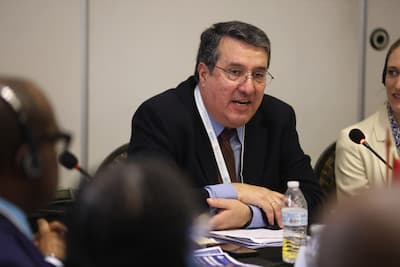
On February 28, 2025, Prof. Rodriguez-Pinzon participated in the panel discussion “Drug Policy in Colombia and the U.S.: Outcomes, Impacts, and Human Rights.” The Academy on Human Rights and International Humanitarian Law, in collaboration with the Universidad Externado de Colombia and the Embassy of Colombia in the United States, hosted the event at AUWCL. Other experts participating were: Ambassador Daniel García-Peña, Ambassador of Colombia to the U.S.; Irene Cabrera, Professor, Universidad Externado de Colombia; Viancy Ortiz, former Colombian Prosecutor and Consultant the American Bar Association (ABA); Juan Pappier, Deputy Director, Americas Division, Human Rights Watch; and John Walsh, Director of Drug Policy and the Andes, WOLA. The panel was moderated by Andrés González Díaz, Professor of Universidad Externado de Colombia, and former Ambassador of Colombia to the OAS.

On March 10, 2025, Prof. Diego Rodriguez-Pinzon delivered a key note lecture at Universidad de Deusto in Bilbao, Spain, titled the “Trump Administration and the United States’ international Human Rights agenda.” The presentation was part of the cycle of conferences on Global Law offer by that academic institution.

Prof. Rodriguez-Pinzon was invited to deliver the course “The Inter-American Human Rights System and the rights of indigenous peoples” in the European Masters Program (EMA). The course took place on March 10 and 11, 2025 in the law school of the University of Deusto, in Bilbao, Spain. The EMA is a consortium of more than 40 European universities that provide postgraduate education in human rights, that include, among others, the Global Campus in Venice that coordinates the European Master’s Programme in Human Rights and Democratisation, University of Leuven, University of Vienna, University of Helsinki, Ca’ Foscari University of Venice, Queen’s University, University of Nottingham, Lund University, University of Coimbra, University of Hamburg, University of Strasbourg, University of Padua, Taras Shevchenko National University of Kyiv, University of Bologna, University of Sarajevo, University of Belgrade and the University of Lucerne.
Prof. Diego Photo 1

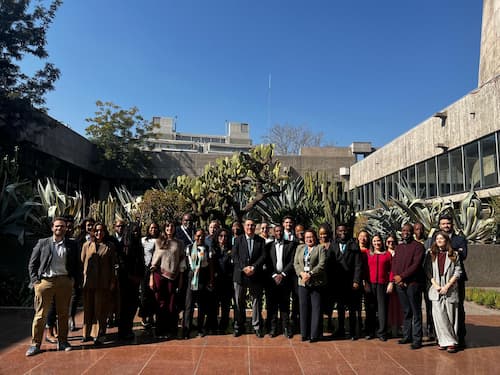
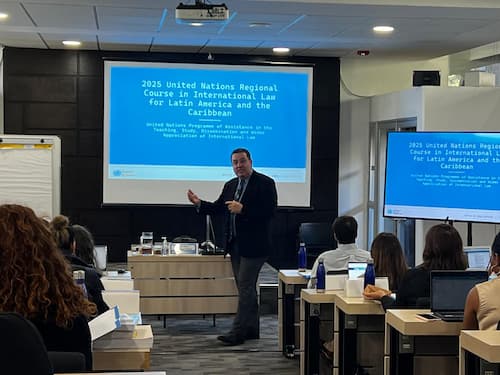
Prof. Rodriguez-Pinzon was invited by the United Nations Programme of Assistance in the Teaching, Study, Dissemination and Wider Appreciation of International Law to serve as a lecturer at the Regional Course in International Law for Latin America and the Caribbean, held at the United Nations Economic Commission for Latin America and the Caribbean (ECLAC) in Santiago, Chile, from April 23 to May 16, 2025. On April 28 and 29, he delivered the course "International Human Rights Law" to an outstanding group of participants — international law officials from the Ministries of Foreign Affairs of Antigua and Barbuda, Argentina, Brazil, Chile, Colombia, Dominica, El Salvador, Guatemala, Guyana, Haiti, Honduras, Jamaica, Mexico, Paraguay, Spain, Saint Lucia, Saint Vincent and the Grenadines, The Bahamas, Trinidad and Tobago, and Uruguay.

The Regional Course program also covered a wide range of topics including Introduction to International Law, Peaceful Settlement of International Disputes, International Environmental Law, Law-Making at the United Nations, International Humanitarian Law/International Criminal Law, International Trade Law, International Investment Law, Law of the Sea, Inter-American International Law, the legal work of ECLAC, Law of Treaties, and International Peace and Security.

On May 28, 2025, Prof. Rodriguez-Pinzon moderated the panel titled “Human Rights and Global Governance: Assessing Multilateralism in times of crisis.” The panelists included Laurence Burgorgue-Larsen (Professor of Public Law in the Sorbonne Law School), Gloria Gaggioli (Associate Professor and Vice-Dean of the Law Faculty, University of Geneva), Fausto Pocar (Porfessor Emeritus in the University of Milan and Ad Hoc Judge international Court of Justice), and Elizabeth Salmon (Special Rapporteur on the Situation of Human Rights in the Democratic People’s Republic of Korea).
Prof. Diego Photo 2

On June 9, 2025, Professor Diego Rodríguez-Pinzón provided the opening remarks for a significant panel discussion titled "Current Issues in the International Law Commission: The View from Inside," co-hosted by the Academy and the American Society of International Law. His introductory comments framed the importance of the International Law Commission's ongoing work and set the stage for a detailed examination of contemporary international legal challenges. The panel featured distinguished ILC members who provided expert analysis on cutting-edge topics including the complex legal questions surrounding state official immunity from foreign criminal jurisdiction and the urgent international law implications of sea-level rise in the context of climate change. This event offered attendees unique insights into the Commission's current deliberations and its role in shaping the future of international legal norms. 

On June 10, 2025, Prof. Rodriguez-Pinzon hosted, as Co-Director of the Academy on Human Rights and Humanitarian Law, the Annual Conference offered jointly with American Society of International Law in the Tillar House. The event was titled “Immunity of State Officials from Foreign Criminal Jurisdiction (ISO) and Sea Level Rise (SLR) in the UN International Law Commission (ILC): Perspectives from the ILC’s Special Rapporteur of ISO Claudio Grossman and of the Co-chair of the Study Group on SLR Juan José Ruda Santolaria”.

On September 18 and 19, 2025, Prof. Rodriguez-Pinzon was invited as a panelist to the academic conference “Impact of International Human Rights Bodies and High Courts in Latin-America,” hosted by Ghent University (Belgium), the Max Plank Institute for Comparative Public Law and International Law (Germany) and the Universidad de Los Andes School of Law (Colombia), held in Bogotá, Colombia. He delivered a presentation about the “Impact of the United Nations Convention against Torture on the recognition of the rights of Persons Deprived of Liberty” based on his experience as former member of the UN Committee against Torture. The conference was attended by experts from Argentina, Belgium, Brazil, Ecuador, El Salvador, Germany, Guatemala, Italy, Mexico, Peru, Uruguay, United Kingdom, United States and Venezuela.

From October 14 to 16, 2025, Prof. Rodriguez-Pinzon was invited as key note expert to lead the regional workshop “Strengthening safeguards during the initial stages of police detention – Best practices from Latin America and the Caribbean”, which took place in Santiago, Chile. The event was hosted by the Ministry of Foreign Affairs and the Ministry of Justice and Human Rights of the Government of Chile, and the Convention against Torture Initiative (CTI), among other institutions. Representatives from States parties and non-States parties to the United Nations Convention against Torture had the opportunity to learn about measures that reduce risks and support the prevention and prohibition of torture and other ill-treatment at the initial stages of detention and investigation. The event provided a forum to explore best practices and to discuss challenges for cooperation between relevant national stakeholders to reduce and address the risks of torture during investigation and early detention at the national level, as well as State cooperation between Latin American and Caribbean States. 

The event included government officials from Barbados, Brazil, Chile, Costa Rica, Denmark, Dominican Republic, Haiti, Indonesia, Germany, Guatemala, Honduras, Mexico, Morocco, Paraguay, Peru, Saint Kitts and Nevis, Saint Lucia, Suriname, The Bahamas, and Uruguay, as well as experts from Chile, Denmark, France, Norway, Seychelles, and Switzerland.

October 7, 2025 — Professor Diego Rodríguez-Pinzón, Co-Director of the Academy, delivered the opening remarks for the event “Assessment of the Human Rights Situation in Colombia – A Conversation with Alberto Yepes.” In his introduction, Professor Rodríguez-Pinzón underscored the importance of examining Colombia’s human rights landscape at a critical moment marked by ongoing risks for social leaders, challenges in implementing the Peace Accord, and shifting regional dynamics. He highlighted the significance of Mr. Yepes’s decades-long work documenting human rights violations and the value of fostering dialogue between academia and civil society. His remarks set the stage for a substantive discussion on accountability, access to justice, and the structural factors affecting peace and human rights in Colombia. Through his leadership, the event reinforced the Academy’s mission to promote informed, evidence-based debate on human rights in the Americas.

On November 11, 2025, Professor Diego Rodríguez-Pinzón, Co-Director of the Academy on Human Rights and Humanitarian Law, opened and led the panel discussion “Ensuring Human Rights in Times of Crisis and Corporate Power: Colombia and the World Face the Same Challenge.” Under his leadership, the event provided an academic space to examine the growing risks faced by human rights defenders amid corporate influence, persistent violence, and weakened protection mechanisms. Professor Rodríguez-Pinzón framed the conversation and emphasized the importance of regional dialogue in strengthening accountability and safeguarding fundamental rights. The panel featured prominent human rights defenders from Colombia and was co-sponsored by Global Witness, Asociación Minga, the Somos Defensores Program, and the Colombia Human Rights Committee (CHRC). His role was essential in guiding the discussion and advancing the Academy’s mission to promote rigorous analysis and meaningful engagement on pressing human rights challenges.

On December 5, 2025, the Centro de Paz y Seguridad of Universidad Externado de Colombia released the report “Analisis comparativo de las muertes por homicidios durante el trienio Petro con respect al trienio Duque. (Comparative analysis of homicides during the three years of Petro and three years of Duque). ” The report was authored by Prof. Diego Rodríguez-Pinzon, Co-Director of the Academy on Human Rights and Humanitarian Law of AUWCL, Prof. Andrés González, Director of the Centro de Paz of Universidad Externado, and Ms. Carolina Saldaña, Director of the Centro de Tecnología y Analítica of Universidad Externado. The document presents comparative statistical data of homicides in Colombia (disaggregated by regions and cities) and identifies the statistical trends during the first three years of the presidential term of Gustavo Petro (August 7, 2022 to August 6, 2025), and the first three years of the presidential term of Ivana Duque (2018-2021). The analysis also includes data from the first three years of the presidential term of the second administration of Juan Manuel Santos (2014-2017). Read the report here.

Prof. Claudia Martin

On February 6, 2025, Professor Claudia Martin moderated a pivotal discussion examiProf. Martin Resizedning the selection process for the next OAS Secretary General. This special event convened leading experts and diplomats to analyze the essential qualifications and leadership qualities required for this crucial regional position. The conversation particularly emphasized the strategic importance of gender parity in the organization's highest leadership levels, exploring how diverse representation could strengthen the OAS's effectiveness in addressing contemporary hemispheric challenges.

On February 16, 2025, Professor Martin delivered the inaugural class for an advanced course on compliance with Inter-American Court judgments, hosted by the Inter-American Court of Human Rights and the MERCOSUR Institute. Her session provided a comprehensive examination of the reparations mechanisms ordered by the Court and their practical implementation across different national contexts. She analyzed how these judicial decisions translate into concrete public policies and explored the measurable impact of compliance on both institutional reforms and individual victims' lives, drawing from extensive research and practical case studies.

On March 10, 2025, Professor Martin moderated a critical side event during CSW69 marking the 10th anniversary of the GQUAL Campaign. The discussion, titled "The Tipping Point: Why Women's Leadership in International Decision-Making Spaces Can't Wait," brought together experts to assess the progress made and persistent barriers in achieving gender parity in international tribunals and organizations. Participants shared strategic insights on accelerating women's representation in global governance, emphasizing the urgency of structural reforms to overcome systemic biases in selection processes.

On April 21, 2025, Professor Martin contributed as a panelist in an in-depth exploration of women's equal participation in international leadership and decision-making. The event examined the evolving legal foundations for equal representation within international law frameworks, with particular attention to CEDAW's General Recommendation 40 as a transformative development. Discussion focused on practical steps required to safeguard recent gains in women's participation and strategies to counteract resistance to gender equality in international spaces.

On April 30, 2025, Professor Martin moderated a vital virtual dialogue examining the systematic use of sexual and gender-based violence as a repression tool against social protests in Latin America. The event brought together experts to analyze recurring patterns of state-perpetrated violence and share comparative responses across different national contexts. Participants developed collective strategies for prevention, protection, and eradication of these human rights violations, emphasizing the need for strengthened accountability mechanisms and survivor-centered approaches.

On May 29, 2025, under Professor Martin's supervision as head of the Secretariat, the Independent Panel released its comprehensive Final Report evaluating candidates for three vacant positions at the Inter-American Commission on Human Rights. The public presentation event detailed the Panel's rigorous assessment methodology and findings regarding candidate qualifications and experience. This transparent evaluation process represented a significant contribution to strengthening the legitimacy and effectiveness of the Inter-American human rights system's principal monitoring body.

On June 9, 2025, Professor Martin moderated an expert panel co-hosted by the Academy and the American Society of International Law featuring current members of the International Law Commission. The discussion provided unique insights into the Commission's ongoing work on pressing international law issues, including state official immunity from foreign criminal jurisdiction and legal responses to sea-level rise. Panelists shared behind-the-scenes perspectives on the progressive development of international law through the ILC's drafting processes and diplomatic consultations.

ASIL Photo Resized Prof. Martin

On June 10, 2025, Professor Martin moderated a timely panel examining the global trend toward authoritarianism and the misuse of emergency powers as threats to human rights protection. The discussion analyzed how states increasingly invoke emergency powers to justify democratic backsliding and human rights restrictions, drawing examples from multiple regional contexts. Experts from international law and civil society perspectives proposed strategies to reinforce democratic resilience and maintain human rights safeguards during periods of declared emergencies.

On June 25, 2025, as part of the OMCT Global Week Against Torture, Professor Martin presented the conclusive findings of a comprehensive mapping report on sexual violence in social protests across Latin America. This joint Academy-REDRESS project documented systematic patterns of torture and sexual violence used to suppress dissent and intimidate protesters. The event highlighted the intersection between gender-based violence and political repression, proposing specific interventions to protect demonstrators and ensure accountability for perpetrators.

On August 2, 2025, Professor Martin participated as a panelist in a GQUAL side event during the 7th Biennial Conference of the Latin American Society of International Law, focusing on equal and inclusive representation of women in international organs and courts. The dialogue assessed regional progress and remaining challenges in achieving gender parity in key international spaces, including the Inter-American System and United Nations bodies. Participants identified concrete steps that states, civil society, and international organizations could take to accelerate the inclusion of qualified women in international decision-making positions.

On August 6, 2025, Professor Martin contributed as a panelist in an open masterclass session introducing the new Certificate in Business and Human Rights program. She provided a critical examination of the evolving relationship between corporate actors and human rights obligations, addressing both regulatory developments and practical implementation challenges. The session explored innovative approaches to ensuring business respect for human rights across global supply chains and extractive industries, particularly in vulnerable communities.

On September 26, 2025, Professor Martin, as Co-Director of the Academy, helped organize and participated in a profound dialogue with Argentine Judge Pablo Salinas and human rights defender Viviana Beigel examining judicial complicity in crimes against humanity. The event focused specifically on the prosecution of judicial accomplices to sexual violence during the Argentine dictatorship, analyzing both criminal liability and civil responsibility frameworks. Discussion incorporated essential gender perspectives in crimes against humanity trials, exploring how legal systems can better address gendered violence within repressive regimes.

Releg Event Group Photo Resized

On October 30 and 31, 2025, Prof. Martin, Co-Director of the Academy a co-founder of the Latin American Network for Gender-Based Strategic Litigation (ReLeG), co-hosted the 4th Discussion Roundtable on Strategic Litigation on Gender-Based Violence in Latin America at AUWCL. The event, organized with the War Crimes Research Office and supported by UN Women’s ACTUEMOS initiative and the European Union, brought together ReLeG members, partner organizations, and experts from across the region. Prof. Martin presented findings from her report on the implementation of reparations in the Inter-American Human Rights System, contributing to a broader dialogue on emerging challenges, best practices, and opportunities for regional collaboration. The roundtable strengthened efforts to advance gender justice, promote strategic litigation, and support policy and legal reforms across Latin America.


Programs and Initiatives 2025

Program of Advanced Studies on Human Rights and Humanitarian Law

ENG_Brochure Summer program_2025 FINAL

The 26th edition of the Program of Advanced Studies on Human Rights and Humanitarian Law was held on campus from May 26 to June 13, 2025. This internationally recognized program is the in-residence component of the hybrid LL.M. in International Human Rights and Humanitarian Law. This year’s program brought together over 100 participants from more than fifteen (15) countries and territories, including legal professionals, LL.M. candidates, JD students, non-credit professionals, and Hubert H. Humphrey Fellows.

We offered fifteen (15) specialized courses—two (2) hybrids, delivered in English and Spanish—that explored a broad range of cutting-edge topics in international human rights and humanitarian law. Namely:

2025 English Courses, Faculty, and Guest Speakers

Human Rights and Development

  • Andrea Repetto Vargas, Director, Independent Consultation and Investigation Mechanism (MICI), Inter-American Development Bank (IDB)
  • Andrea Guevara Díaz, Compliance Specialist, Independent Consultation and Investigation Mechanism (MICI), Inter-American Development Bank (IDB)
  • Christian González Chacón, Compliance Specialist, Independent Consultation and Investigation Mechanism (MICI), Inter-American Development Bank (IDB)
  • Margaret Ellen Roggensack, Executive Officer, Business and Human Rights Lawyers Association
  • Mariana Clemente Fábrega, Senior Environmental and Social Compliance Specialist, Compliance Advisor Ombudsman (CAO), International Finance Corporation / Multilateral Investment Guarantee Agency (IFC/MIGA)
  • Martin Packman, Senior Dispute Resolution Expert, Independent Consultation and Investigation Mechanism (MICI), Inter-American Development Bank (IDB)
  • Scott Adams, Senior Dispute Resolution Officer, Dispute Resolution Service, World Bank
  • Serge Selwan, Senior Compliance Specialist, Inspection Panel, World Bank
  • Claudia Martin, Co-Director and Professorial Lecturer in Residence, Academy on Human Rights and Humanitarian Law, AUWCL

Human Rights and the Environment

  • Johanna Gusman, Senior Attorney, Legal Pathways to Fossil Fuel Phaseout, Center for International Environmental Law (CIEL)
  • Marcos Orellana, United Nations (UN) Special Rapporteur on Toxics and Human Rights; Professor, AUWCL

Human Rights and Technology

  • Eduardo Bertoni, Director, Center for Human Rights and Humanitarian Law, AUWCL

International Humanitarian Law

  • Gloria Gaggioli, Former Director, Geneva Academy of International Humanitarian Law and Human Rights; Associate Professor and Vice-Dean, Faculty of Law, University of Geneva
  • Jamie Williamson, Executive Director, International Code of Conduct for Private Security Service Providers' Association (ICoCA)

International Justice for Human Rights Violations

  • David Crane, Founding Chief Prosecutor, Special Court for Sierra Leone; Former Under Secretary-General, United Nations (UN)
  • Helen Duffy, Founder, Human Rights in Practice, The Hague, Netherlands; Professor of Human Rights and Humanitarian Law, Leiden University

United Nations Human Rights System (Hybrid)

  • Claude Heller, Former President, United Nations Committee Against Torture (CAT); Eminent Ambassador of Mexico; Independent Consultant on International Affairs
  • Rochus Pronk, Head, Human Rights Department, Ministry of Foreign Affairs, The Hague, Netherlands
  • Gerald Staberock, General Secretary, World Organization Against Torture (OMCT), Geneva, Switzerland

Women and International Human Rights Law

  • Roberta Clarke, Commissioner, Inter-American Commission on Human Rights (IACHR)
  • Viviana Waisman, Founder and Director, Gender Equality Policy (GenEq); Founder, Women’s Link


2025 Spanish Courses, Faculty, and Guest Speakers

Derecho Internacional Humanitario

  • Elizabeth Salmón, United Nations (UN) Special Rapporteur on the situation of human rights in the Democratic People's Republic of Korea; Professor of International Law, Pontifical Catholic University of Peru
  • Emiliano Buis, Associate Professor of Public International Law, Faculty of Law, University of Buenos Aires, Argentina

Derechos Humanos y Cortes Internacionales

  • Juan José Ruda Santolaria, Member, International Law Commission (ILC); Principal Professor, Department of Law, Pontifical Catholic University of Peru
  • Laurence Burgorgue-Larsen, Professor of Public Law, Sorbonne Law School, France

Implementación de los Derechos Humanos en Derecho Interno

  • Carlos Ayala, President, Executive Committee, International Commission of Jurists (ICJ)
  • Eduardo Ferrer MacGregor-Poisot, Former President, Inter-American Court of Human Rights (IACtHR), Organization of American States (OAS)

Impunidad y Justicia Internacional

  • Fausto Pocar, Professor Emeritus, University of Milan; Ad Hoc Judge, International Court of Justice (ICJ); Former President, International Criminal Tribunal for the former Yugoslavia (ICTY)
  • Felipe Gómez Isa, Professor of Public International Law, University of Deusto; Director, Program on Human Rights Training for Indigenous Leaders
  • Juan Méndez, Commissioner, International Commission of Jurists (ICJ); Professor AUWCL

Litigio y Activismo en Derechos Humanos

  • Katya Salazar, Executive Director, Due Process of Law Foundation (DPLF)
  • Viviana Krsticevic, Executive Director, Center for Justice and International Law (CEJIL)

Mujeres y el Derecho Internacional de los Derechos Humanos

  • Claudia Martin, Co-Director and Professorial Lecturer in Residence, Academy on Human Rights and Humanitarian Law, AUWCL
  • Daniela Kravetz, Former United Nations (UN) Special Rapporteur for Eritrea, United Nations Human Rights Council
  • Natalia Gherardi, Executive Director, Latin American Team for Justice and Gender (ELA)

Sistema de Derechos Humanos de las Naciones Unidas

  • María Clara Galvis Patiño, Former Vice President, United Nations (UN) Committee on Enforced Disappearances
  • Santiago A. Canton, Secretary General, International Commission of Jurists (ICJ)

Sistema Interamericano de Derechos Humanos (Hybrid)

  • Claudio Grossman, Member, United Nations (UN) International Law Commission (ILC); Dean Emeritus, American University Washington College of Law (AUWCL)
  • Claudia Martin, Co-Director and Professorial Lecturer in Residence, Academy on Human Rights and Humanitarian Law, American University Washington College of Law (AUWCL)
  • Diego Rodríguez-Pinzón, Co-Director and Professorial Lecturer in Residence, Academy on Human Rights and Humanitarian Law, American University Washington College of Law (AUWCL); Former Member, United Nations Committee Against Torture (CAT)
  • Jorge Meza, Assistant Executive Secretary for the Petition and Case System, Inter-American Commission on Human Rights (IACHR)
  • Pablo Saavedra, Secretary, Inter-American Court of Human Rights (IACtHR)
  • Tania Reneaum Panszi, Executive Secretary, Inter-American Commission on Human Rights (IACHR)

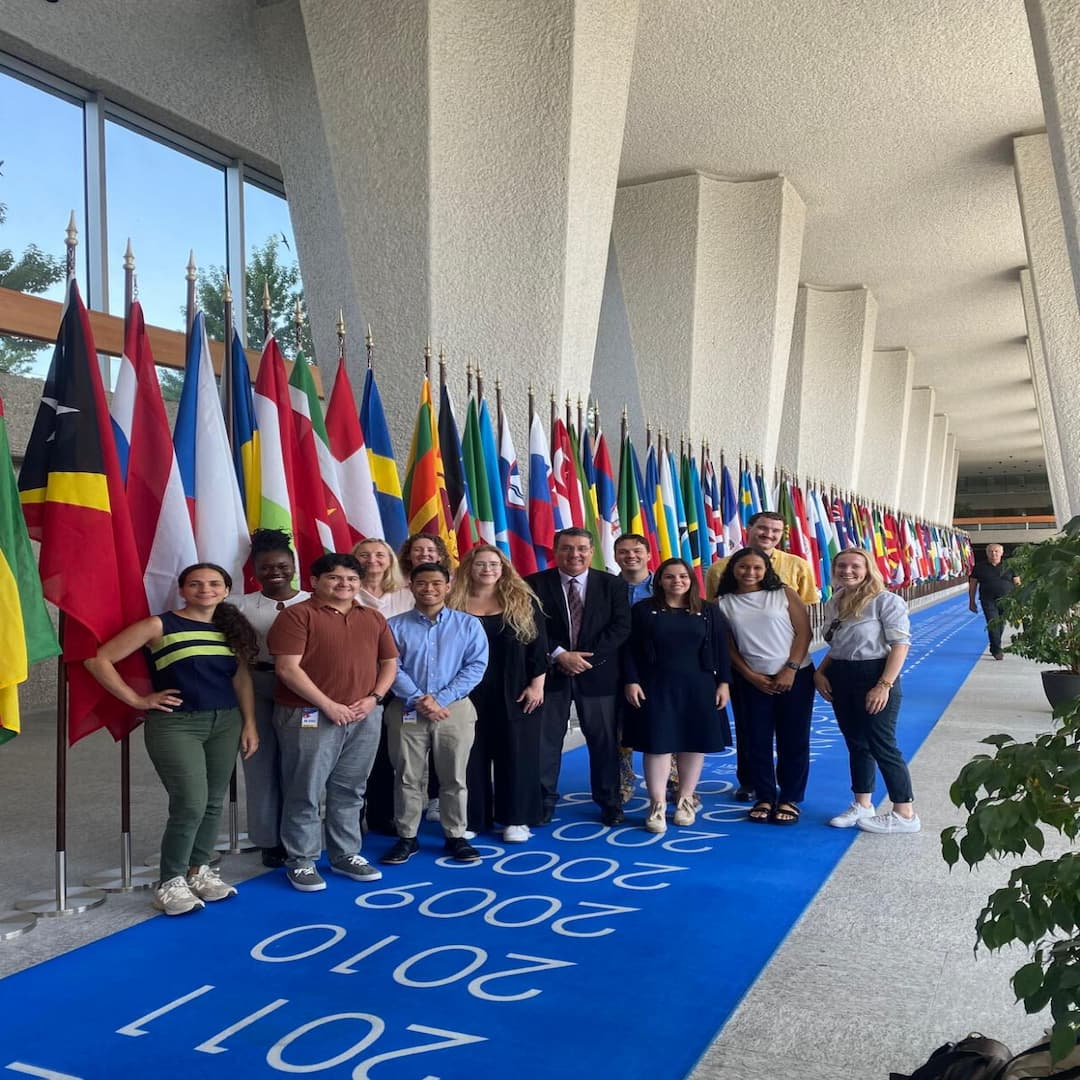
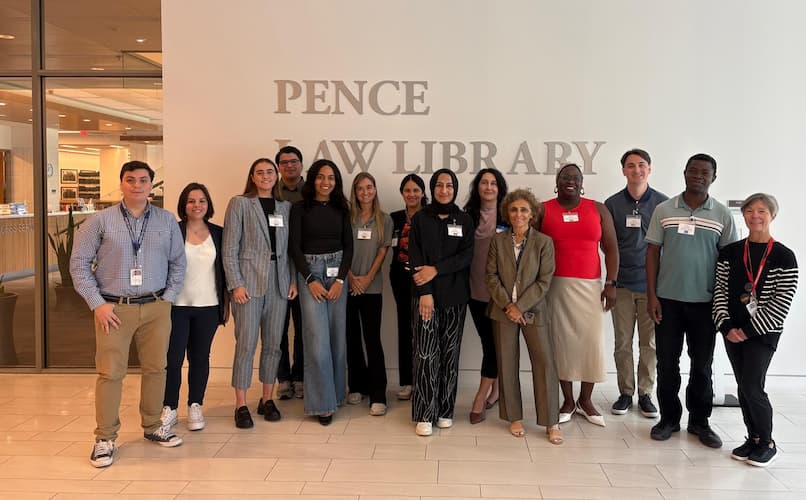
We invite you to relive this year's experience by exploring our 2025 Program of Advanced Studies Photo Gallery.

2026_ENG_Brochure Summer program

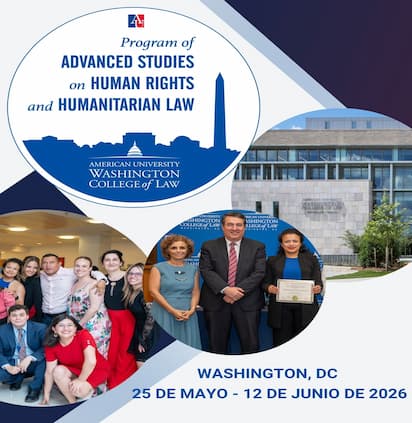
The 2026 Pogram of Advanced Studies in Human Rights - May 25 to June 12, 2026

The Program of Advanced Studies returns for its in-person 2026 edition, running from May 25 to June 12 in the heart of Washington, D.C. This unique program offers three intensive weeks of learning with 12 innovative seminars taught by over 40 world-renowned experts. It is an unparalleled opportunity to deepen your understanding of human rights and international humanitarian law while engaging with a global network of professionals and academics. The call for applications is now open—don’t miss your chance to be part of this transformative experience! Learn more.
LAURENCE

2026 Inter-American Human Rights Moot Court Competition - May 17 to May 22, 2026

The 31st anniversary of the Inter-American Moot Court Competition will take place from May 17 to May 22, 2026! This prestigious event brings together teams, judges, observers, and court officers from around the world to engage within the Inter-American Human Rights System. Registration for all roles is now open—don’t miss your chance to be part of this unique academic experience that fosters debate, advocacy, and the defense of human rights. The theme for the 2026 IAMOOT Competition is "The Right to Protest under International Human Rights Law Legal Protection and Challenges Ahead." We will be collaborating with RFK Human Rights. Learn more.
 

Maria

2026 Human Rights Essay Award - DEADLINE - February 3, 2026

It's time to show your passion for international human rights law! The Human Rights Essay Award 2026 is looking for innovative ideas on “The Right to Protest Under International Human Rights Law: Legal Protection and Challenges Ahead”. Open to lawyers with law degrees from around the world, this contest gives you the freedom to explore any aspect related to this vibrant topic.
Submit your work online and be part of this exciting opportunity to stand out in the academic field! Learn more.


HRD Cover

Human Rights Month

During the Summer Program of Advanced Studies in Washington, DC, the Academy of Human Rights and International Humanitarian Law sponsors the annual Human Rights Month event, which includes conferences, workshops, a film festival, and discussions on recent publications in the field of human rights.

These events provide spaces for education, discussion, and networking among academics, professionals, and activists. Distinguished experts will participate in these activities designed to address the protection of human rights in times of crisis, focusing on the impact and responses to crises globally, as well as the prevention and denunciation of human rights violations. Learn more.

Geneva Photo

Summer Program in Geneva

This two-week course examines contemporary UN human rights law and its implementation through Geneva-based mechanisms. Students explore key tools of the UN Human Rights Council, including Special Procedures and the Universal Periodic Review, as well as treaty bodies under major human rights conventions and relevant UN agencies. The course highlights the roles of civil society, NGOs and states in enforcing human rights, and introduces international humanitarian law and its protections through engagement with the International Committee of the Red Cross.

The second part focuses on the International Labor Organization (ILO) where students study the ILO’s tripartite system, its supervisory mechanisms, and its influence on global labor legislation. The course also addresses corporate social responsibility, ILO technical cooperation, and protections for vulnerable groups in the global economy.

Students meet experts and visit Geneva institutions, including sessions of the UN Human Rights Committee and the UN Human Rights Council. Learn more.

Nuevo Programa Website

Certificate in Business & Human Rights

This semester we launched the first 'Certificate in Business and Human Rights'. This online, Spanish-language program offers a critical perspective on the relationships and tensions between the business sector and human rights, drawing on dialogue among actors from multiple fields involved in this dynamic.

Through a diverse and high-level panel of experts, we explore key concepts related to the State’s duty and corporate responsibility; the UN Guiding Principles (protect, respect, and remedy); due diligence; judicial and non-judicial grievance mechanisms; the role of international organizations in promoting regulatory frameworks and protection mechanisms; civil society’s strategies for advocacy, monitoring, and litigation; and the private sector’s responses to emerging regulatory and social demands regarding due diligence, sustainability, and the prevention of negative impacts. Learn more.

Providing Access to Human Rights Education - Hybrid and Virtual Master's Program

Fall 2025 Orientation

HRHL LLM Residential Students

The LL.M. in Human Rights and International Humanitarian Law in Residence at Washington DC Law School Campus.

Our LL.M. in Residence group represents a dynamic mix of bright minds from Peru, U.S.A., Congo, Brazil, Bolivia, Haiti, Afghanistan, Belgium, Honduras, Nicaragua, Colombia, Uganda, Germany, Mexico, Dominican Republic, Panama, and many more! This diverse and enriching environment offers a unique platform to share ideas and approaches to current challenges in the field of human rights around the world. Find out more about the LL.M. and join this global learning community! Learn more.

EADH

Course, Estudios Avanzados en DDHH (Spanish)

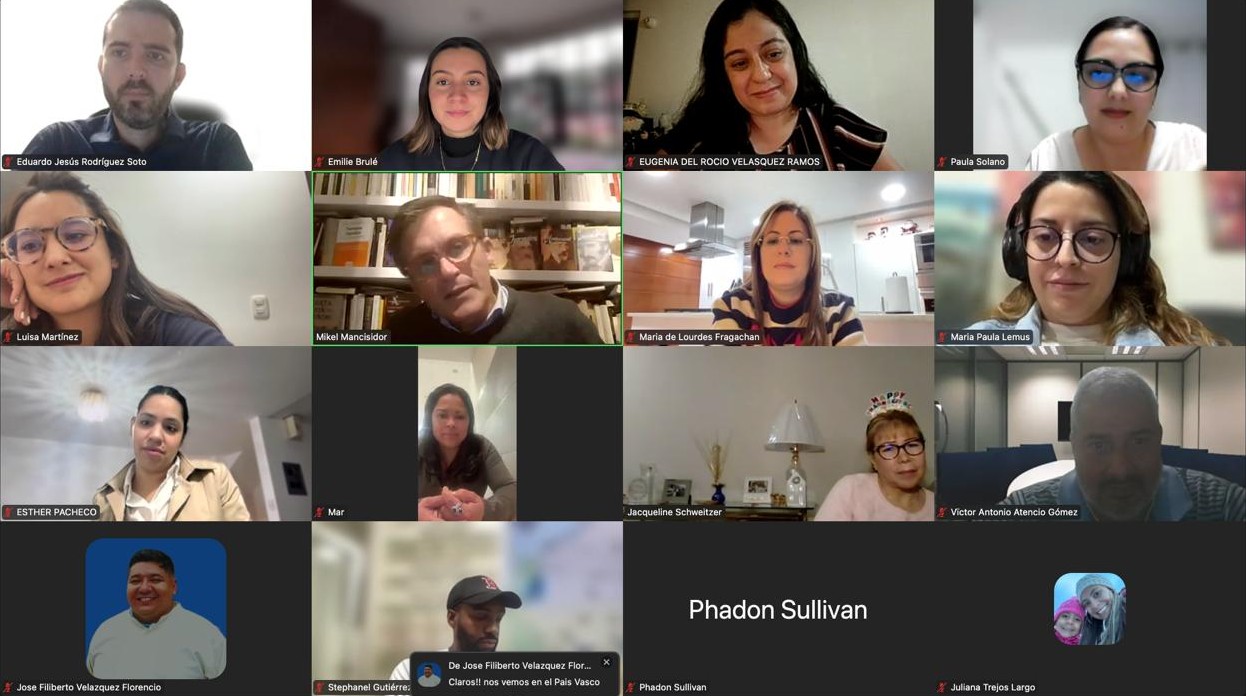
Estudios Avanzados en Derechos Humanos, taught by Adjunct Prof. Mikel Mancisidor, is a core course of the LL.M. in Human Rights and International Humanitarian Law. It examines human rights recognized in international conventions and humanitarian law, analyzing their scope and protections. Students study case law from international supervisory bodies, discuss applications in current events, and compare practices from their countries of choice with international standards. By course end, students understand the complexities of human rights law across contexts.


LPGV

Course, La Protección Internacional de los Grupos Vulnerables (Spanish)

Led by Adjunct Prof. Jorge Araya, La Protección Internacional de los Grupos Vulnerables introduces the concept of vulnerable groups: who they are, why they are considered vulnerable, and their rights under International Human Rights Law. Students examine the state’s tripartite human rights obligations and duties of non-state actors. The course reviews protections for groups such as children, people living with HIV/AIDS, IDPs, indigenous peoples, and older persons, analyzing relevant case law and standards under Human Rights Law, Humanitarian Law, and regional systems.

DMND

Course, Derechos de las Mujeres y No Discriminación (Spanish)

Taught by Adjunct Prof. Thiago Pierobom de Avila, this new course aims to provide a critical and interdisciplinary perspective on Inter-American human rights standards related to violence against women, incorporating gender and intersectional perspectives. It seeks to strengthen awareness and skills regarding women’s access to justice. The course consists of six sessions with interactive classes and case study analyses, covering topics such as gender perspectives, femicide, racial discrimination and intersectional approaches, sexual violence, discrimination based on sexual diversity, comprehensive reparations, and health care. At the end of the six sessions, students are offered mentorship by Prof. Pierobom as they navigate their independent study projects.

IPVG

Course, International Protection of Vulnerable Groups (English)

The LL.M. in Human Rights and International Humanitarian Law also offers courses on specific and current topics in human rights. This course examines how international law protects the rights of disadvantaged and vulnerable groups, with a particular focus on persons with disabilities. Students analyze global legal frameworks such as the UN Convention on the Rights of Persons with Disabilities (CRPD) and explore strategies to promote inclusion and prevent segregation in institutions. Through interactive discussions, case studies, and advocacy exercises, students gain practical tools to defend and advance the rights of vulnerable populations. The course is taught by Adjunct Prof. Eric Rosenthal.


AHR Photo

Course: Advanced Human Rights (English)

The course Advanced Human Rights, taught by Prof. Claudia Martin, examines the scope of key human rights recognized in major international conventions and how these protections function in practice. Students review case law from bodies such as the UN Human Rights Committee, the Inter-American Commission and Court of Human Rights, and the European Court of Human Rights. They compare treaty standards with state practice and debate challenges in specific contexts. Through weekly classes, readings, case studies, and discussions, students gain a nuanced understanding of how international human rights norms apply across different situations.

Staff Human Rights Day

Meet the Academy Team

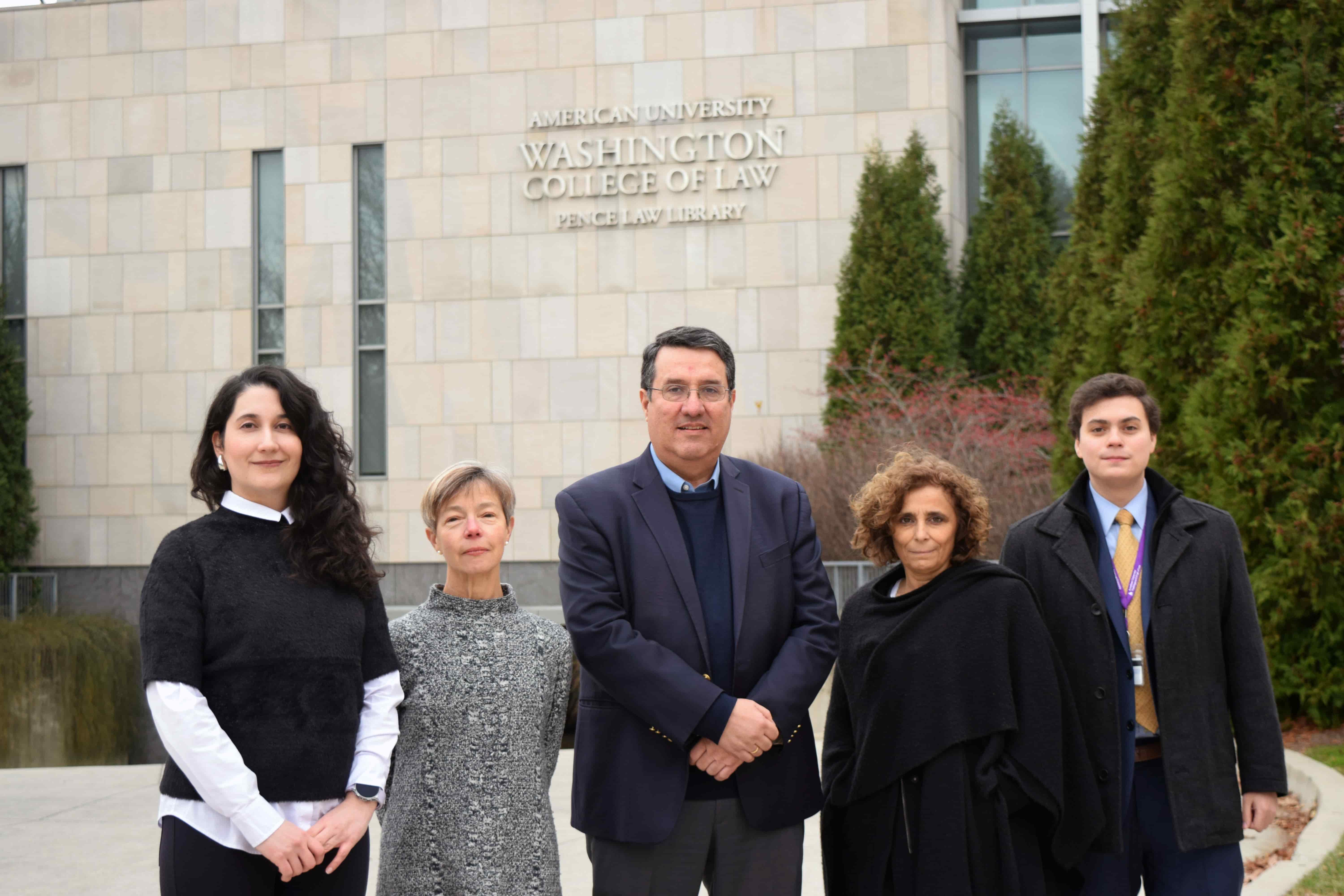
We are thrilled to introduce you to the exceptional team behind the Academy on Human Rights and Humanitarian Law! Together, we are dedicated to advancing the understanding and promotion of human rights and humanitarian law worldwide.