
Panel Discussion on the Current Issues in the International Law Commission
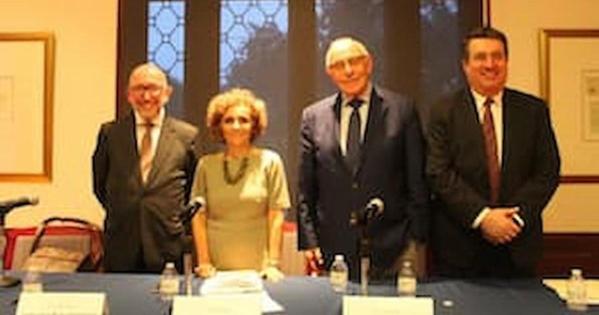
The American University Washington College of Law, through its Academy on Human Rights and Humanitarian Law, extends its sincere appreciation to the American Society of International Law (ASIL) for welcoming the Academy and providing a valuable platform to co-host the panel “Current Issues in the International Law Commission: The View from Inside” at ASIL Headquarters in Washington, D.C. This collaborative event reflects the strong and longstanding partnership between ASIL and the Academy, built through years of joint initiatives to advance the study of human rights and humanitarian law.
The Academy is grateful to Ambassador Juan José Ruda Santolaria and Professor Claudio Grossman, Dean Emeritus, for their insightful presentations on the legal implications of sea-level rise and the immunity of State officials from foreign criminal jurisdiction, respectively. Their expertise and thoughtful analyses greatly enriched the conversation and deepened understanding of these complex topics currently under consideration by the United Nations International Law Commission.
The ASIL–Academy Conference is one of the most meaningful events within the Academy’s annual Human Rights Month Program, which coincides with the Summer Program of Advanced Studies on Human Rights. Each year, the Academy and ASIL are proud to welcome distinguished experts from various fields of human rights and international law. In previous editions, the event has featured notable figures such as Judge Juan Manuel Gómez Robledo, currently serving on the International Court of Justice. This year’s session was particularly significant, as both Ambassador Ruda Santolaria and Professor Grossman are active members of the International Law Commission. For the Academy, it is always special to highlight the work of Dean Emeritus and Co-Chair, Professor Grossman.
The event took place on June 9, 2025, at Tillar House, headquarters of the American Society of International Law and home to its partnership with the Academy.
Professor Claudia Martin, Co-Director of the Academy, moderated the panel, and Professor Diego Rodríguez-Pinzón delivered the opening remarks. The event was coordinated in close collaboration with Taylor Kilpatrick, Senior Programs Manager, and Brita Jelen, Program Officer at ASIL.
Remarks by Prof. Diego Rodríguez-Pinzón
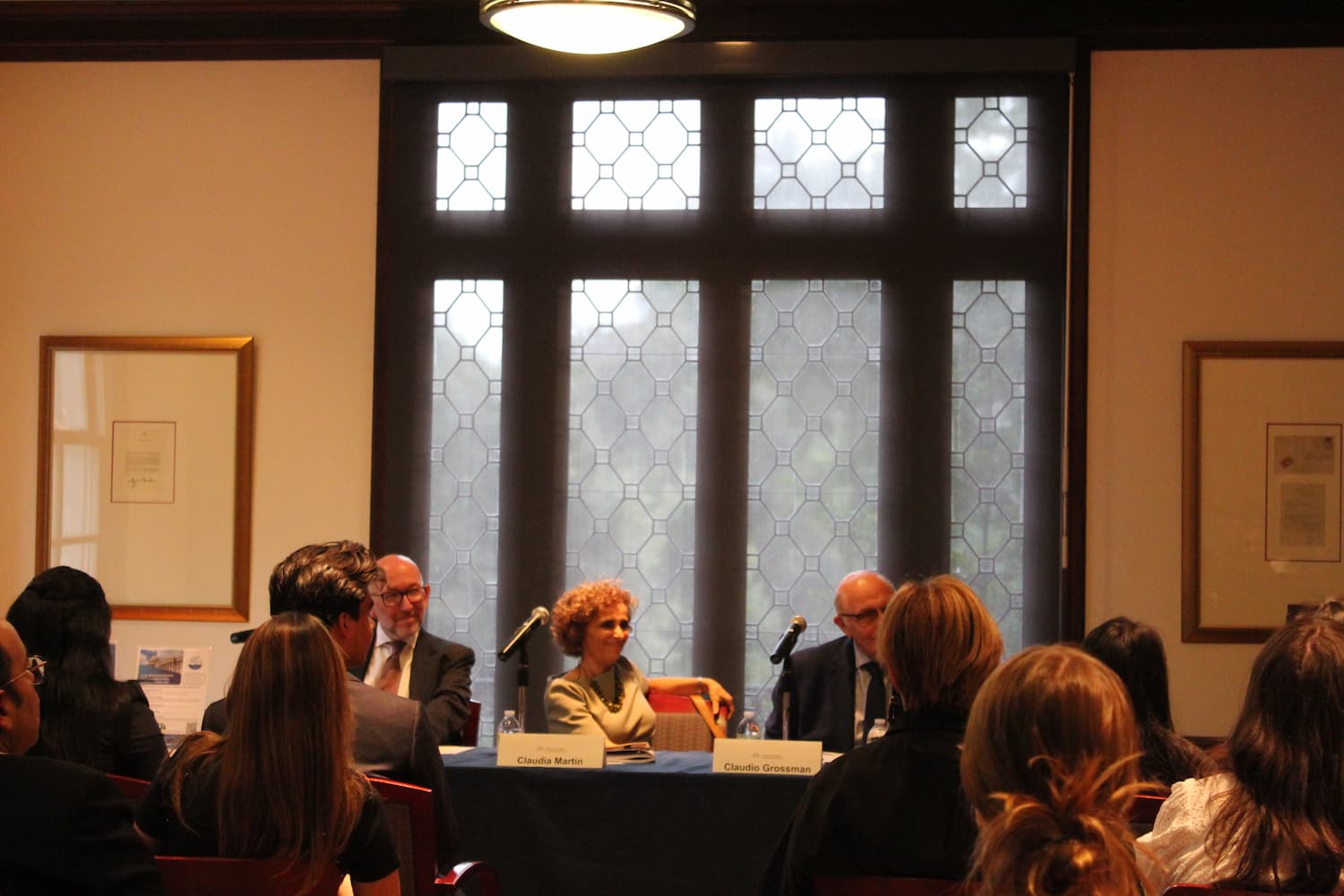
In his opening remarks, Professor Diego Rodríguez-Pinzón, Co-Director of the Academy on Human Rights and Humanitarian Law, welcomed the panelists, the American Society of International Law (ASIL), and all participants, expressing appreciation for their engagement in the discussion. He emphasized the importance of the long-standing collaboration between ASIL and the American University Washington College of Law in fostering dialogue on pressing issues of international law. Highlighting the relevance of the topics under discussion—sea-level rise and the immunity of State officials—he noted that such conversations are essential to advancing justice, accountability, and the rule of law in addressing today’s global challenges. The Washington College of Law looks forward to continued collaboration with ASIL in promoting scholarly exchange and developing joint initiatives focused on emerging international legal challenges, including those related to climate change.
Ambassador Juan José Ruda Santolaria: His Perspective on the Legal Implications of Sea-Level Rise
Ambassador Juan José Ruda Santolaria opened his presentation by outlining the work of the International Law Commission (ILC) on the topic of sea-level rise in relation to international law. The ILC began addressing this matter in 2019 after a proposal submitted by the Federated States of Micronesia. An open-ended Study Group was established—co-chaired by several members, including Ambassador Ruda—to examine three interconnected subtopics: the law of the sea, statehood, and the protection of persons affected by sea-level rise.
By May 2025, the Study Group had completed and adopted its Final Consolidated Report, capturing key legal conclusions and State practice. More than 100 States participated over the years, demonstrating significant global concern and a strong consensus on the importance of preserving legal stability amid the accelerating impacts of climate change.
Ambassador Ruda explained that the UN Convention on the Law of the Sea (UNCLOS) does not expressly address climate-related sea-level rise. Nonetheless, States have consistently emphasized the need to preserve its integrity and ensure legal certainty. There is broad support for maintaining existing baselines and maritime boundaries regardless of physical coastal changes, a position grounded in principles of stability, fairness, and equity. Updating baselines or nautical charts due to rising sea levels is not a legal obligation, a practice that prevents unjust territorial loss and aligns with the principle of permanent sovereignty over natural resources.
He highlighted that States strongly support the continuity of statehood and sovereignty of low-lying and small island States, even if their territories eventually become uninhabitable. Political declarations from the Pacific Islands Forum (2023) and the Alliance of Small Island States (2024) reaffirm this commitment. Continuity of statehood is rooted in fundamental principles such as self-determination, territorial integrity, legal stability, and equity—principles essential to preventing statelessness and safeguarding national identity.
Ambassador Ruda underscored that human rights obligations remain fully applicable despite the fragmented legal framework in this area. There is a pressing need to strengthen legal and practical protections for individuals displaced or affected by sea-level rise, including climate mobility agreements, humanitarian visas, and anti-statelessness measures. Ensuring participation, consultation, and respect for the dignity, culture, and identity of affected communities is essential.
He emphasized that the three subtopics—law of the sea, statehood, and protection of persons—are deeply interconnected: statehood and maritime rights underpin sovereignty, resource access, and the well-being of affected populations. Ensuring legal stability, equity, and effective international cooperation remains critical. States and international organizations should interpret existing law with flexibility and, where necessary, develop new mechanisms to address emerging challenges.
Ambassador Ruda concluded by stressing that the ILC’s work reveals an urgent need for coordinated global legal responses to safeguard rights, preserve statehood, and protect human dignity in the face of sea-level rise, while maintaining stability, fairness, and international peace.
Professor Claudio Grossman’s Presentation: The Challenges Surrounding Immunity of State Officials
Professor Claudio Grossman, Dean Emeritus, focused his presentation on the topic of the immunity of State officials from foreign criminal jurisdiction—an increasingly relevant issue within the work of the International Law Commission. Drawing from his experience as Special Rapporteur, he explained the complexities inherent in balancing two cornerstone principles of international law: the sovereign equality of States and the necessity of ensuring accountability for serious international crimes.
He provided an overview of the ILC’s ongoing discussions and draft articles, highlighting the importance of maintaining clarity and predictability in determining when immunity applies and when exceptions may arise. Professor Grossman traced the evolution of the ILC’s work on this topic, noting efforts to define immunity ratione personae (granted to certain high-ranking officials while in office) and immunity ratione materiae (covering official acts performed on behalf of the State). He emphasized that the Commission’s task is to delineate these immunities without undermining the fight against impunity for the most serious crimes—genocide, war crimes, crimes against humanity, and other grave violations.
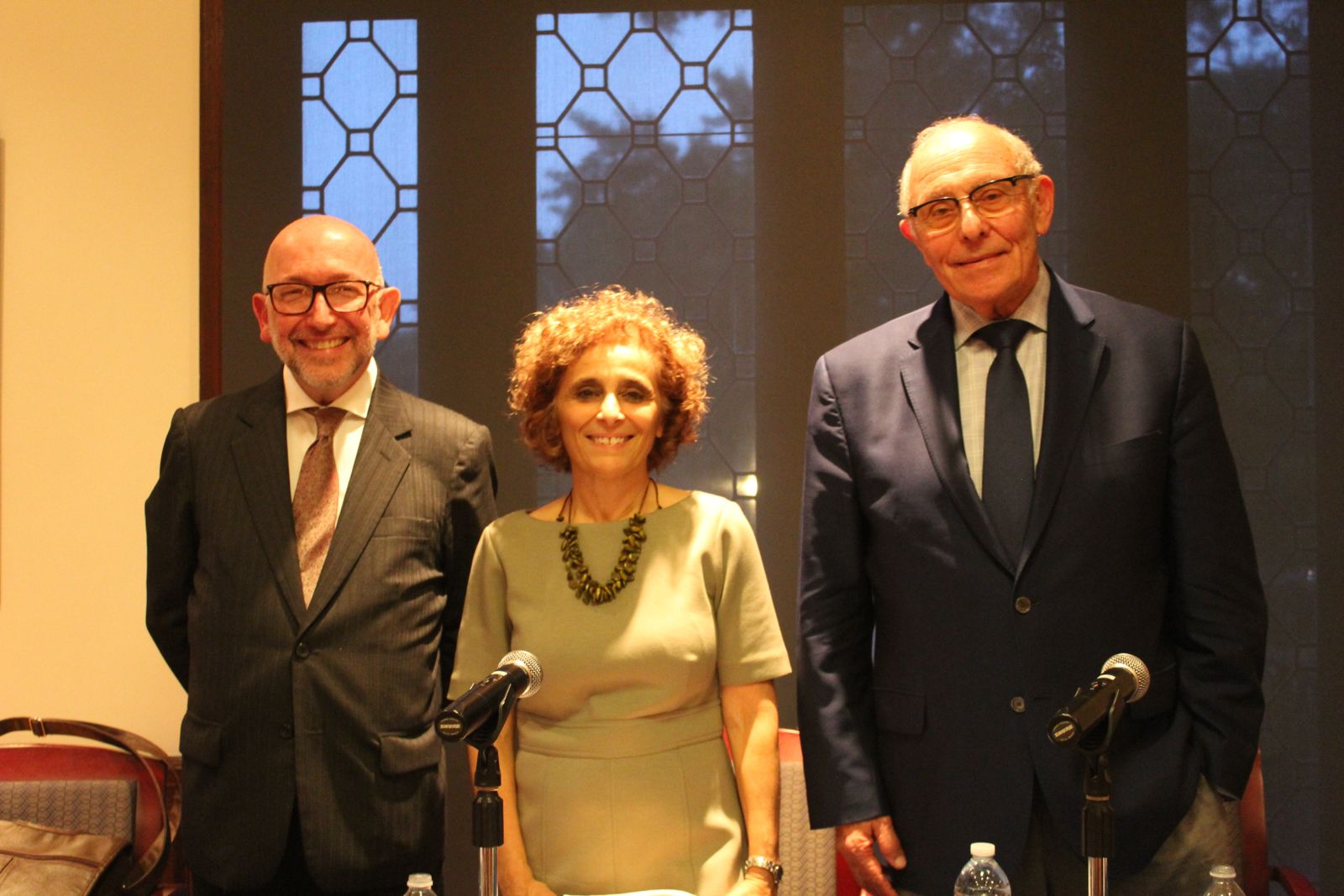
Professor Grossman then discussed the broader implications for the international legal order, particularly the challenges faced by national courts when allegations of grave crimes intersect with principles of immunity. He noted that States maintain divergent positions, yet there is growing recognition of the need to reconcile respect for State sovereignty with the protection of fundamental human rights. He underscored the importance of constructive dialogue among States aimed at achieving a balanced approach that strengthens both accountability and international cooperation.
In closing, Professor Grossman reaffirmed that the ILC’s work on the immunity of State officials represents a significant contribution to the development and codification of international law. He encouraged further engagement from States and scholars to refine these principles so that they reflect contemporary realities while remaining faithful to the core objectives of international law—justice, peace, and respect for human dignity. His remarks highlighted the enduring relevance of this topic and its connection to broader global efforts to uphold the rule of law in international relations.
What is next?
In closing, the Academy on Human Rights and Humanitarian Law expresses its deep appreciation to ASIL, our distinguished speakers, and all attendees for contributing to a rich and timely exchange. The reflections shared underscore the urgency of advancing legal clarity on sea-level rise and the immunity of State officials—issues at the forefront of the International Law Commission’s agenda. The Academy remains committed to fostering informed dialogue, promoting collaboration, and supporting innovative legal approaches to the global challenges that define our time. We look forward to continuing our work with ASIL in the near future, both through the Summer Program and other joint initiatives. The Academy will keep engaging on the discussion of both topics.