
El Salvador at the Crossroads: Crimes Against Humanity under the Public Security Policy
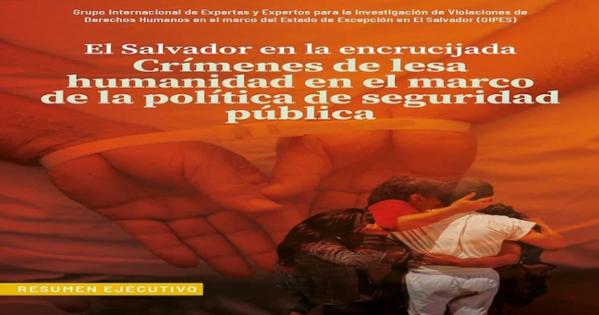
The International Group of Experts for the Investigation of Human Rights Violations under the State of Emergency in El Salvador (GIPES), appointed by the Due Process of Law Foundation (DPLF) presents its final report entitled: “El Salvador at the Crossroads: Crimes against Humanity under the Public Security Policy.”
As described by DPLF, GIPES was formed with the aim of investigating the alleged serious human rights violations taking place in the context of the State of Exception public security policy that has been in place of El Salvador since March 2022 and determining whether they might constitute crimes against humanity. You can learn more about GIPES here.
The presented report was developed with the academic guidance and coordination of leading human rights experts, including:
- Susana SáCouto, Director of the War Crimes Research Office of the Washington College of Law;
- Claudia Martin, AUWCL Professorial Lecturer in Residence and Co-Director of the Academy on Human Rights and Humanitarian Law;
- Gino Costa, Attorney and Ph.D. in International Relations from the University of Cambridge. From 1990 to 1994, he served as an advisor to the United Nations Observer Mission in El Salvador (ONUSAL), which oversaw the implementation of the Peace Accords;
- José Guevara, former member and twice chair of the United Nations Working Group on Arbitrary Detention;
- Santiago Canton, Secretary General of the International Commission of Jurists (ICJ). Former Executive Secretary of the Inter-American Commission on Human Rights (IACHR) and Special Rapporteur for Freedom of Expression.
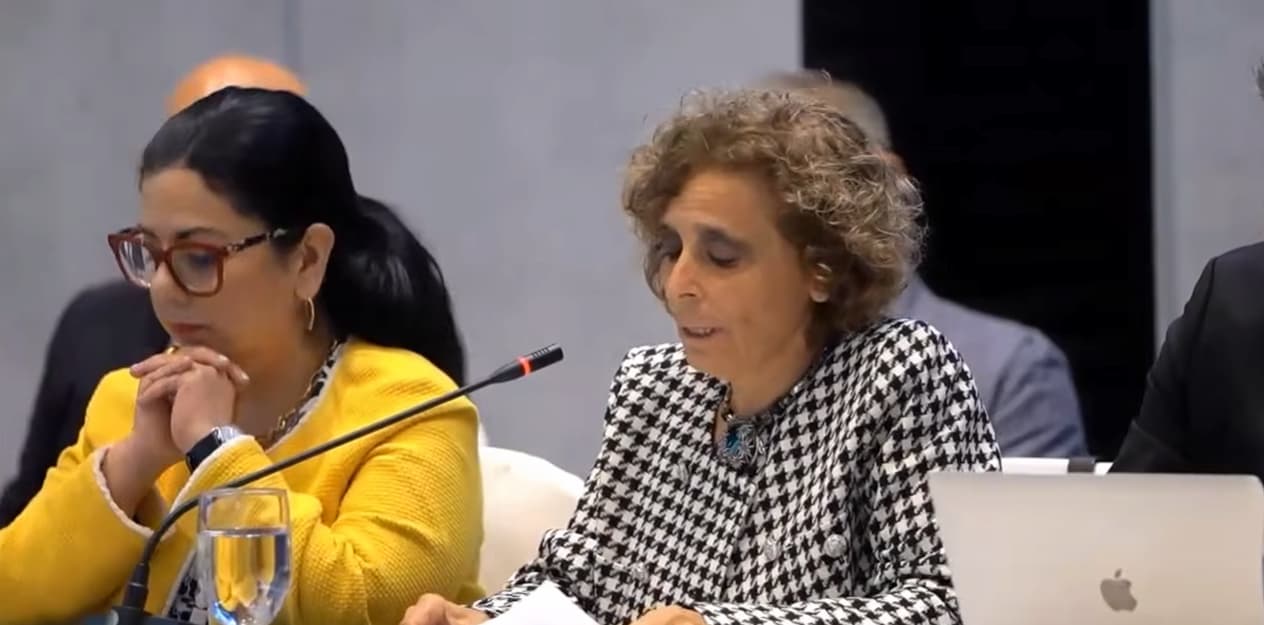
The report was presented at two public events. The first was during a hearing at the 195th session of the Inter-American Commission on Human Rights (IACHR), held on Monday, March 10, in Guatemala. The hearing is available on the IACHR YouTube channel. Watch full hearing here.
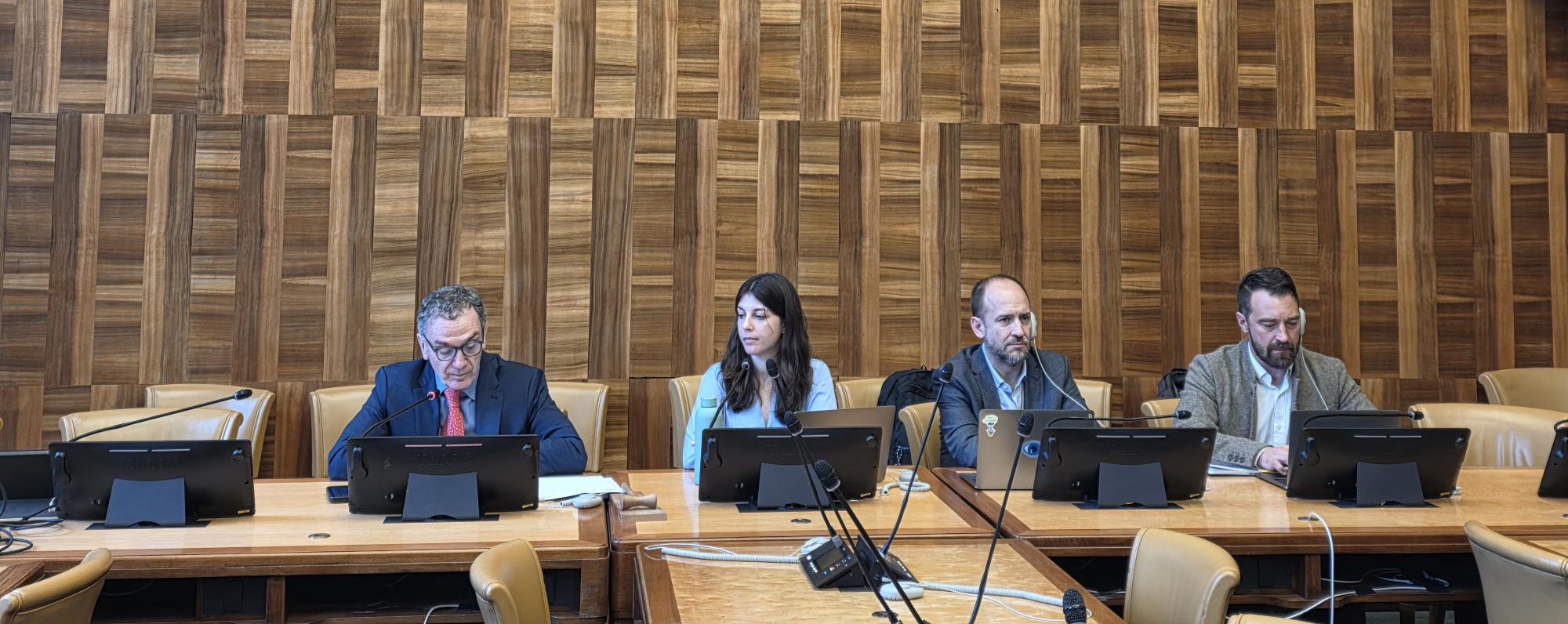
The second discussion of the report’s findings took place at a side event to the 61st session of the United Nations Human Rights Council on Wednesday, March 11. The event’s recording is available here.
Introduction and Report’s Background: Public Security Policy and State of Emergency:
In recent years, El Salvador has implemented sweeping public security measures aimed at combating gang violence and restoring public order. While these policies have resulted in a significant reduction in crime rates, they have also generated widespread concern among international human rights observers.
In response to escalating gang activity, the government declared a nationwide state of emergency in March 2022, granting authorities expanded powers to address security threats. These measures included the suspension of certain constitutional protections, authorization of warrantless arrests, and extended pretrial detention periods.
As a result, tens of thousands of individuals were detained in a short period of time. While the policy has been credited with improving public safety, concerns have arisen regarding the legality, proportionality, and oversight of its implementation.
This report examines whether the implementation of these measures, particularly under the state of emergency—has led to patterns of conduct that may constitute serious human rights violations, including potential crimes against humanity under international law.
Scope of Reported Violations and Legal Framework: Crimes Against Humanity:
Evidence gathered from various sources indicates a pattern of practices that raise serious human rights concerns. Reports suggest that many arrests were carried out without sufficient evidence or judicial oversight, often relying on generalized suspicion or anonymous accusations.
Individuals from marginalized communities, particularly young men, appear to have been disproportionately affected. In numerous cases, detainees reportedly lacked access to legal representation, and their families were not informed of their whereabouts.
Conditions within detention facilities have also been the subject of scrutiny. Allegations include overcrowding, inadequate access to food and medical care, and instances of mistreatment. Reports of deaths in custody have further intensified concerns regarding the protection of detainees’ fundamental rights.
Within the framework of international human rights and criminal law, these developments raise the question of whether such conduct may constitute crimes against humanity. Crimes against humanity are defined as acts committed as part of a widespread or systematic attack directed against a civilian population, with knowledge of the attack.
Key elements include:
- The existence of a widespread or systematic pattern of conduct
- Targeting of a civilian population
- State involvement or acquiescence
- Knowledge of the broader context in which the acts occur
The scale and consistency of the reported actions raise questions as to whether these criteria may be met.
Analysis, Government Position, and International Oversight:
The report is informed by the expertise of leading human rights scholars and practitioners, including our Co-Director at the Academy, Professor Claudia Martin. Their contributions emphasize the importance of examining not only individual violations but also broader patterns that may indicate systemic practices. The analysis underscores the role of accountability, transparency, and adherence to due process in maintaining the legitimacy of state actions, even in the context of national security efforts.
At the same time, the government of El Salvador maintains that its public security policy is both necessary and effective in addressing longstanding threats posed by organized criminal groups. Officials highlight the significant reduction in homicide rates and argue that extraordinary measures are justified in the face of persistent violence. Public support for the policy remains strong in many sectors, reflecting the population’s desire for safety and stability. However, these considerations must be balanced against the state’s obligation to uphold fundamental human rights.
Regional bodies, including the Inter-American Commission on Human Rights, play a critical role in monitoring developments and assessing compliance with international human rights standards. These institutions provide mechanisms for accountability and serve as platforms for addressing potential violations. Civil society organizations, legal experts, and academic institutions continue to contribute to the documentation and analysis of the situation, reinforcing transparency and public awareness.
Conclusion:
El Salvador stands at a pivotal moment in its efforts to balance security and human rights. While the government’s policies have achieved measurable success in reducing violence, the methods employed raise significant legal and ethical concerns.
The findings of this report suggest that the scale and nature of the measures implemented under the public security policy warrant careful scrutiny. Ensuring that efforts to maintain public safety do not undermine the rule of law is essential to sustaining long-term stability and justice.
Ultimately, the situation calls for continued monitoring, transparent investigation, and a commitment to upholding the principles of human dignity, accountability, and the protection of fundamental rights across all sectors of society.
Please red the full report in Spanish here.
Check executive summary in English here.
Check executive summary in Spanish here.