
Advancing the Feminist Movement in Latin America: Regional Perspectives and Strategies
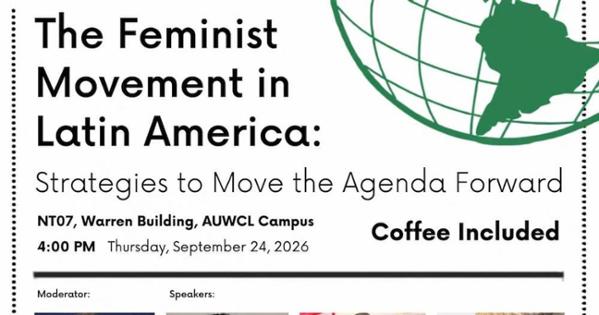
American University Washington College of Law (AUWCL), in collaboration with regional feminist organizations, convened a panel discussion on “Strategies for Advancing the Feminist Movement in Latin America.” The event brought together feminist advocates and experts from Ecuador, Argentina, and Mexico to discuss challenges facing feminist organizations, human rights advocacy, gender equality, and access to justice across the region.
The event was made possible with the valuable support of the Latin American Network for Gender-based Strategic Litigation (ReLeG), Articulación Regional Feminista, and AUWCL’s War Crimes Research Office and Program on Gender, Theory, Law & Practice. The discussion was moderated by Professor Claudia Martin, Co-Director of [program or office name], following an introduction to the panel’s scope and the participating speakers.
Ana Almeida, President of Corporación Humanas Ecuador and a coordinator at Proyecto Transgénero, discussed human rights and advocacy challenges in Ecuador. She highlighted efforts to advance gender equality and election-related advocacy, as well as concerns regarding restrictions on civic participation, threats and intimidation affecting candidates and journalists, reproductive health challenges, and constraints on resources available to local advocacy organizations. She emphasized the importance of continued advocacy for gender equality and human rights.
Delfina Schenone Sienra, Director of the Policy Area at ELA – Equipo Latinoamericano de Justicia y Género, addressed the challenges facing feminist organizations in Argentina amid a difficult political and policy environment. She discussed reductions in public funding for gender-related programs, restrictions on civic participation, and advocacy efforts addressing gender-based violence. She also highlighted the importance of documenting rights violations, pursuing policy and legal reforms, and strengthening international and regional advocacy, including engagement with the Committee on the Elimination of Discrimination against Women (CEDAW).
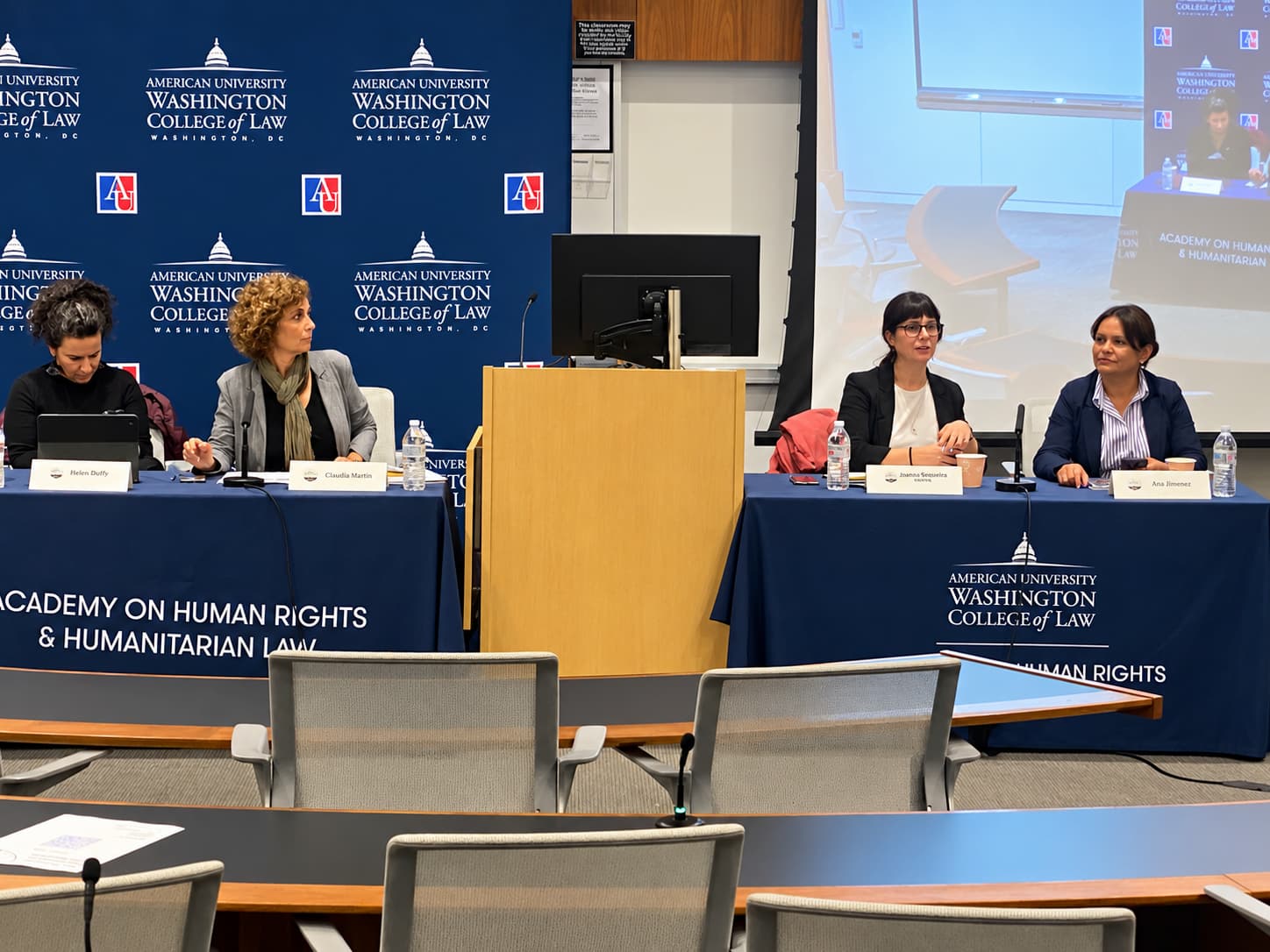
Maïssa Hubert, Deputy Director of EQUIS: Justicia para las Mujeres, presented perspectives on feminist movements and access to justice in Mexico. She discussed challenges involving the justice system, institutional legitimacy, gender-based violence, and the broader political environment. Her remarks underscored the importance of strengthening access to justice and supporting locally driven efforts to address discrimination and exclusion.
Dialogue and Regional Exchange
Participants attending both in person and online contributed questions and shared perspectives from their own countries, creating a broader comparative discussion of the challenges and opportunities facing feminist movements across Latin America.
In her closing remarks, Professor Claudia Martin emphasized the importance of continued engagement, cooperation, and the exchange of information and resources among feminist organizations and advocates. The discussion highlighted the value of regional dialogue and collaboration in advancing gender equality, human rights, and access to justice.