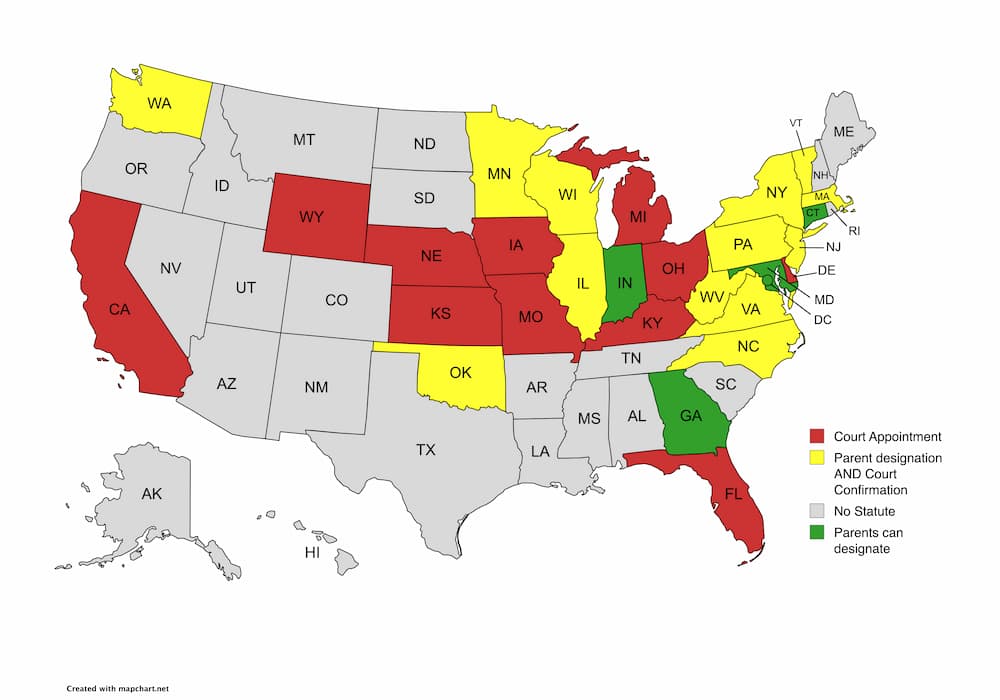
Standby Guardianship, or SBG, is a way for parents to make sure that, in case of an emergency, their minor children (also known as children under the age of 18) can be taken care of by a trusted adult who is not their parent. These emergencies are defined by state law. For example, adverse immigration action (being deported or detained), major physical or mental health issues, and incarceration can all be reasons for appointing a standby guardian for your child.
The way that standby guardianship works is specifically related to an emergency event. Generally, it will go into effect after a specific event has occurred and can exist largely as a 'backup plan.' The process for appointing a Standby Guardian varies greatly from state to state.
Appointing a standby guardian for your child can be a very confusing, stressful process. This website provides clear, useful, state-specific information on how to start the process for parents seeking standby guardianship.